

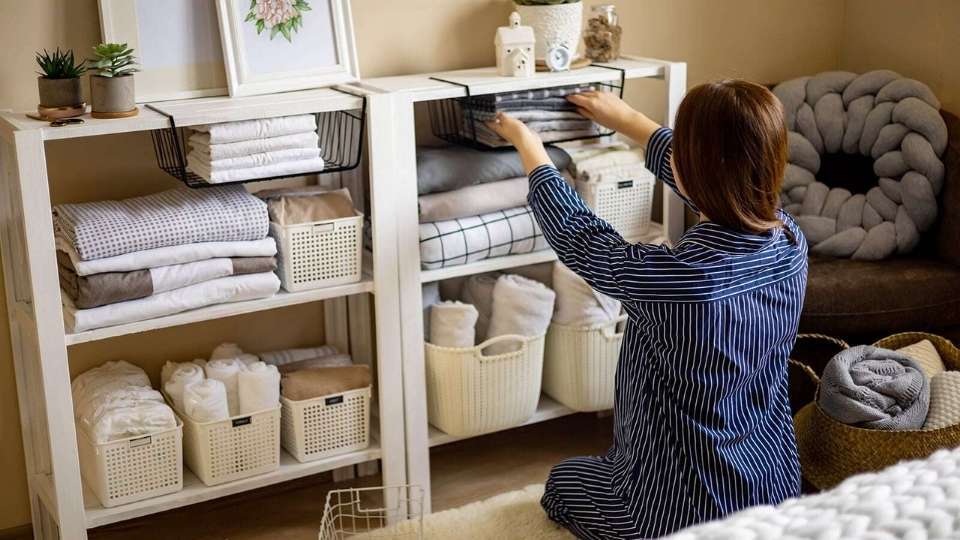
Managing a home often feels like you’re running a small business without the benefit of an actual accounting department.
Honestly, most people think of home organization as just tidying up closets or labelling spice jars.
But there’s a deep and direct connection between the physical state of your living space and the health of your bank account.
Have you ever noticed how a messy desk makes you feel like your whole life is spinning out of control? I know I have. Usually, around midnight, when I can’t find a stamp.
When your environment is cluttered, your mental bandwidth is stretched thin. It’s like trying to think while a TV is blaring in the next room.
This makes it incredibly easy to miss a due date, overlook a subscription, or buy a third bottle of olive oil because you couldn’t find the first two. Maybe it sounds small, but those little things add up. Fast.
By streamlining your physical world, you create the mental space you need to master your money.
The Financial Cost of Physical Clutter
Clutter isn’t just an eyesore. It’s a silent drain on your resources. Think about the last time you lost a physical bill or an important notice from your bank. You know the feeling, that sinking sensation in your gut when you find a late notice buried under a pile of junk mail.
That misplaced piece of paper often leads to late fees or missed opportunities for interest savings. But what if everything had its place? When every document has a designated home, these small but cumulative losses simply disappear.
The same logic applies to your pantry and storage areas. Many households waste hundreds of dollars every year on duplicate purchases. If you can’t see what you own, you’ll naturally assume you need more.
So, organizing your kitchen and storage bins lets you take an accurate inventory in seconds. This ensures that every dollar you spend at the store is intentional rather than accidental. And that’s the point.
Creating a Dedicated Financial Command Center
One of the most effective ways to bridge the gap between home organization and finance is to set up a central command center. This doesn’t need to be a full home office. It can be a simple desk in the corner or even a specific drawer in the kitchen.
The goal is to have one single point of entry for everything involving money.
In this space, you should keep your essential tools. This includes a shredder, a filing system for tax documents, and a dedicated charger for your devices.
Having a consistent spot to sit down and handle the numbers removes the friction that usually leads to procrastination. When you know exactly where your laptop and your records are, you’re much more likely to stay on top of your weekly budget reviews.
I guess it’s about making the right choice, the easiest choice.
Digital Organization and Modern Tools
In today’s world, organization extends far beyond physical paper. Our digital lives are often more cluttered than our junk drawers. To truly manage household finances, you’ve got to organize your digital workspace.
This involves setting up folders for electronic receipts and using apps that simplify the movement of money.
For example, a major part of staying organized is making sure that funds are where they need to be without a trip to a physical building. Utilizing a SoFi mobile check deposit app lets you clear paper checks off your counter and into your account immediately.
This type of digital tidiness ensures that your cash flow remains fluid and your physical space stays clear of lingering paperwork.
The faster you can move a task from “to do” to “done,” the less mental clutter you carry around. It’s about reclaiming your time. And honestly, your sanity too.
The “One In, One Out” Rule for Expenses
A classic home organization technique is the “one in, one out” rule. For every new item you bring into the house, one has to leave. You can apply this same philosophy to your household subscriptions and recurring expenses.
Before signing up for a new streaming service or a monthly box, look at your current list of commitments.
Does that monthly subscription still bring you joy, or is it just another digital dust bunny?
Organizing your digital subscriptions once a month helps you identify “zombie” expenses that are eating away at your savings. Just as you’d purge a closet of clothes that no longer fit, you should purge your bank statement of services that no longer provide value.
This habit keeps both your home and your budget lean and efficient. Honestly, it’s a relief to let things go.
Meal Planning as Spatial and Financial Order
The kitchen is often the heart of the home, but it’s also where money leaks out the fastest. Organizing your meals is a form of household management that pays immediate dividends.
When your fridge is organized, you can clearly see what needs to be eaten before it spoils. No more science projects growing in the back of the crisper drawer. We’ve all been there.
By spending thirty minutes on a Sunday to organize a meal plan based on what you’ve already got in your cabinets, you avoid the expensive “what’s for dinner” panic. And that is where the real savings happen.
This reduces food waste and cuts down on how often you grab takeout. It’s a perfect example of how physical order leads to financial discipline.
Making the System Stick
The key to any organizational system is consistency. It’s better to spend ten minutes every day tidying your financial papers than two hours once a month. Build small habits into your routine.
Maybe you process the mail as soon as you walk through the door, or you check your account balances every morning while the coffee brews.
Are you ready to stop reacting and start planning?
When your home is organized, you feel a sense of control. That confidence naturally spills over into how you handle your money. You stop reacting to financial surprises and start acting with intention.
A clear home truly does lead to a clear mind and a healthier wallet. It’s a journey, you know? One drawer at a time.