

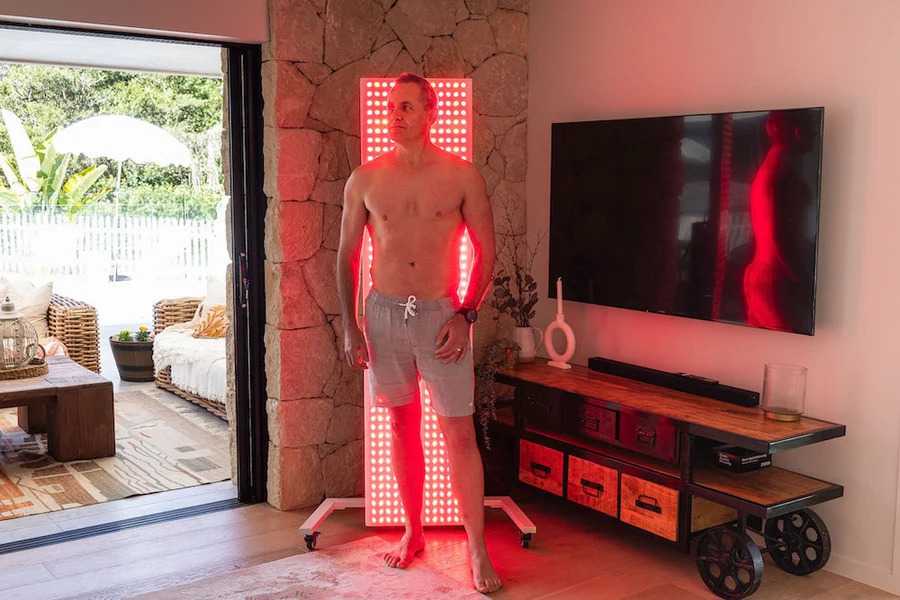
I’ve spent way too many late nights lurking on health-focused Reddit forums, trying to filter out the brilliant home wellness setups from the expensive snake oil.
I’m fascinated by the promise of heat and light therapy, but as a consumer, I wanted to know if combining an infrared dry sauna with red light therapy actually delivers clinical-grade changes to your cells, or if these cabins are just overpriced, decorative light boxes.
That skepticism led me to research the strict physics of how light and heat move through human tissue, and ultimately, it guided me when purchasing a custom infrared sauna.
I chose a layout from SaunaCloud with integrated red light therapy panels built right into the bench.
What I learned along the way is that clean science and raw physics dictate whether you get any real therapeutic value from your investment.
If you configure the heat wavelengths and light proximity correctly, the health benefits of a home sauna with red light therapy include cardiovascular mimicry and support for muscle recovery. But if you choose wall-mounted panels at 18 to 24 inches, you receive insufficient intensity for photobiomodulation.
Key takeaways
- True cellular light therapy requires your skin to be within 1 to 4 inches of the emitters to prevent light wave attenuation, making standard wall-mounted panels mathematically ineffective.
- Infrared saunas operate at a tolerable 110°F to 135°F, heating your body directly to trigger cardiorespiratory benefits that mimic moderate exercise without requiring extreme convective air temperatures.
- Dry far-infrared cabins are low-maintenance, zero-moisture structures that protect sensitive LED electronics from water damage while eliminating the mold and rot risks of traditional steam environments.
The Physics of Heat: Infrared vs. Traditional
To understand why hybrid saunas are so popular, we first have to dissect how we heat our bodies.
Traditional saunas rely on convective heating, where a heater warms the surrounding air to a blistering 150°F to 195°F (65.5°C to 90.5°C), which in turn warms you.
If you’ve ever sat in a classic Finnish sauna, you know that breathing in that scorching air can feel intense, and many people have to cut their sessions short simply because their lungs or skin can’t handle the heat.
Infrared saunas work on an entirely different principle.
Instead of wasting energy heating the ambient room air, they use infrared radiation to reach you directly.
This light-based warmth penetrates thin layers of your skin, raising your core temperature while keeping the physical air at a highly manageable 110°F to 135°F (43.3°C to 57.2°C).
This lower operating range makes the experience much more accessible to individuals who find traditional heat overwhelming, allowing you to stay inside longer.
Trusted institutions like the Mayo Clinic highlight that this radiant heat is highly effective at warming tissues safely.
By staying in the cabin for a full, comfortable session, you can trigger a deep, productive sweat. Think of it as a modern upgrade to ancient wellness routines: you get all the benefits of a deep sweat at temperatures that actually let you breathe comfortably.
The Proximity Paradox in Photobiomodulation
When sauna manufacturers began slapping red LED panels onto the walls of their cabins, they created a physical problem that most buyers overlook, though it is a frequent topic of debate in online infrared sauna forums.
While light therapy can benefit your cells, it is bound by the rigid laws of physics, a reality confirmed by academic research such as the findings published in Photomedicine and Laser Surgery regarding dose-rate dependency and clinical efficacy.
Why distance ruins the red light benefit
True light therapy, known scientifically as photobiomodulation, relies on specific wavelengths of light—typically 660nm (red light) and 850nm (near-infrared light)—to stimulate cellular energy. However, the attenuation rate of these light waves in open air is incredibly steep.
As light travels away from its source, its power drops off. For photobiomodulation to trigger any biological activity inside your body, your skin must respect a strict therapeutic distance of just 1 to 4 inches from the light source.
Most standard configurations feature a wall-mounted panel sitting 18 to 24 inches away from where you are sitting or lying down.
At that distance, the light energy is so thoroughly diluted by the time it reaches you that it might as well be a decorative nightlight. You get beautiful ambient lighting, but zero cellular benefit.
How bench integration changes the chemistry
To bridge this gap, you need a configuration that bypasses the open-air drop-off entirely.
This is why a bench-integrated layout is the only design that makes scientific sense.
A bench-integrated setup relies on near-field emitters embedded directly into the platform where you lie down, keeping your physical tissue within that crucial 1-to-4-inch sweet spot.
When those 660nm and 850nm light waves reach your cells at the correct therapeutic distance, they hit receptors in your mitochondria called Cytochrome C Oxidase.
This triggers a chemical reaction that releases nitric oxide and upregulates cellular energy production.
If you are sitting on a bench with the lights mounted on a distant wall, this crucial mitochondrial response never happens.
Evidence-Based Cardiorespiratory Support
If you look past the marketing speak, the cardiovascular benefits of regular red light infrared saunas are well-supported by real medical data.
When you sit in a dry infrared cabin, the deep heat triggers what researchers call cardiovascular mimicry.
Your blood vessels dilate to shunt heat to your skin, and your heart rate rises, mimicking the metabolic and cardiac workload of a moderate exercise session—like a brisk walking pace—all while you lie completely still.
Leading medical reviews have looked closely at these effects.
In publications like Mayo Clinic Proceedings and Clinical Cardiology, researchers have compiled data showing that regular passive heat exposure supports blood pressure management and assists with overall muscle recovery.
Studies have even explored these benefits as supportive strategies for managing conditions like heart failure, hypertension, and diabetes.
However, it’s vital to stay grounded: while incorporating wellness-focused features is a popular choice when creating a personalized home, these thermal therapies are supportive wellness tools, not standalone cures or replacements for standard medical care.
You also have to be practical about the common “heavy metal detox” claims splashed across wellness blogs.
Some influencers claim that sweating in a custom infrared sauna acts as a magical vacuum cleaner for heavy metals and metabolic waste. But if we ask experts like Dr. Melissa Young at the Cleveland Clinic, the clinical reality is far more realistic.
While your skin does secrete trace elements in sweat, 99% of your body’s daily filtration is handled entirely by your liver and kidneys.
Heat exposure is fantastic for localized circulation and skin health, but you don’t need to invent unscientific “purging” myths to justify the very real cardio and recovery benefits.
Why Wet Steam Degradation Matters
A hybrid sauna that combines deep dry heat and targeted light requires high-quality electrical components.
If you’ve ever wondered why you can’t just hang a red light panel inside a traditional steam room or Russian banya, the answer comes down to basic electrical engineering.
High-performance LED arrays are built using delicate semiconductor materials.
If you subject these micro-electronics to the heavy moisture, thick steam, and high humidity of a traditional wet sauna, the moisture will inevitably penetrate the casings.
This water vapor leads to internal corrosion of the delicate wiring, short-circuits the electrical pathways, and rapidly destroys the panels.
Therefore, when you are looking for features to buy in a home red light therapy sauna, you must stick with high-quality dry wood construction—such as Canadian cedar or hemlock—paired with localized, near-field infrared elements.
A dry environment is the only way to ensure your electronic investment doesn’t short out or fail prematurely.
The Economics of a Permanent Home Wellness Cabin
Investing in a home sauna can go two ways: the disposable route, or the permanent property upgrade.
At first glance, a cheap, plastic zip-up sauna blanket or pop-up tent on Amazon might seem like an easy way to save money. But these temporary options often present significant downsides.
They wear out quickly, are notoriously difficult to keep sanitary, and often emit high levels of electromagnetic fields (EMFs) from cheap, unshielded wiring.
On the other hand, installing a permanent, solid-wood dry cabin built with low-EMF heating elements is an investment in both your physical recovery and your home. Because dry infrared cabins do not generate steam or ambient moisture, they pose zero risk of mold, rot, or water damage to your drywall and structural framing.
From a home-improvement and property valuation perspective, a dry premium cabin is exceptionally low-maintenance and retains its value beautifully.
It functions as a permanent architectural feature that future home buyers view as a high-end wellness asset, turning a personal recovery routine into lasting equity.
It is also safe for daily use, keeping you free from the off-gassing plastics and electrical hazards associated with low-end portable alternatives.
Protocol Mechanics: Times, Temps, and Safety
To get the most out of your combined heat and light session, you should run a simple, consistent calibration protocol. Here is the exact blueprint I use to set up my sessions:
- Calibrate the Temp: Warm your dry sauna to a range between 110°F and 135°F. This allows you to comfortably sustain a longer session while ensuring your core body temperature rises steadily.
- Position for Light Capture: If you are using a modern, bench-integrated setup, lie flat directly over the near-field emitters. Ensure your bare skin sits within that crucial 1 to 4 inches of the light panel to ensure full photobiomodulation.
- Set your Timer: Keep your sessions between 20 to 30 minutes. This is the optimal window to allow your cells to absorb the 660nm and 850nm wavelengths while giving your cardiovascular system a gentle, exercise-style workout.
- Hydrate Fully: Drink a tall glass of water before you step inside, and another when you exit. Let your body cool down naturally for a few minutes before moving to a cool shower.
While these protocols are safe for daily use for the average person, listen to your body first.
If you have any history of cardiovascular concerns, or if you’re pregnant, make sure to consult with your personal doctor before adding daily high-heat protocols to your routine.
When executed with the right gear and correct physical proximity, a home dry cabin is an effective way to level up your physical recovery without leaving the comfort of your own home.
Frequently Asked Questions
It depends entirely on the distance between your skin and the light source. To trigger photobiomodulation at the cellular level, your skin must be within 1 to 4 inches of the emitters; if the lights are mounted on a wall 18 to 24 inches away, you will receive no biological benefit regardless of the light quality.
For the average person, these units are safe for daily use. A session lasting between 20 to 30 minutes is considered the optimal window to achieve both the cardiovascular mimicry effects of the heat and sufficient light absorption for cellular recovery.
Light energy is subject to a steep attenuation rate, meaning its intensity drops off rapidly as it travels through air. If you are too far from the source, the energy becomes too diluted to stimulate the mitochondrial receptors required for cellular energy production.
Traditional saunas rely on convective heating, which warms the air to extreme temperatures, often making them difficult to breathe in. Infrared saunas heat the body directly using radiant light, allowing for a more comfortable experience at lower, more manageable ambient temperatures.
You should not combine high-performance LED electronics with a wet, steamy environment. Moisture will inevitably penetrate the casings, leading to internal corrosion, electrical shorts, and premature failure of the light arrays.
A permanent wooden cabin is generally a better investment because it is easier to sanitize, free from the off-gassing plastics found in cheap portable alternatives, and typically uses better-shielded, low-EMF heating elements. Additionally, a permanent dry unit functions as a high-end property asset rather than a disposable item that will eventually wear out.
This refers to the body’s response to deep infrared heat, where blood vessels dilate to release heat and the heart rate increases. This process mimics the metabolic and cardiac workload of moderate exercise, such as a brisk walk, while you remain stationary.