

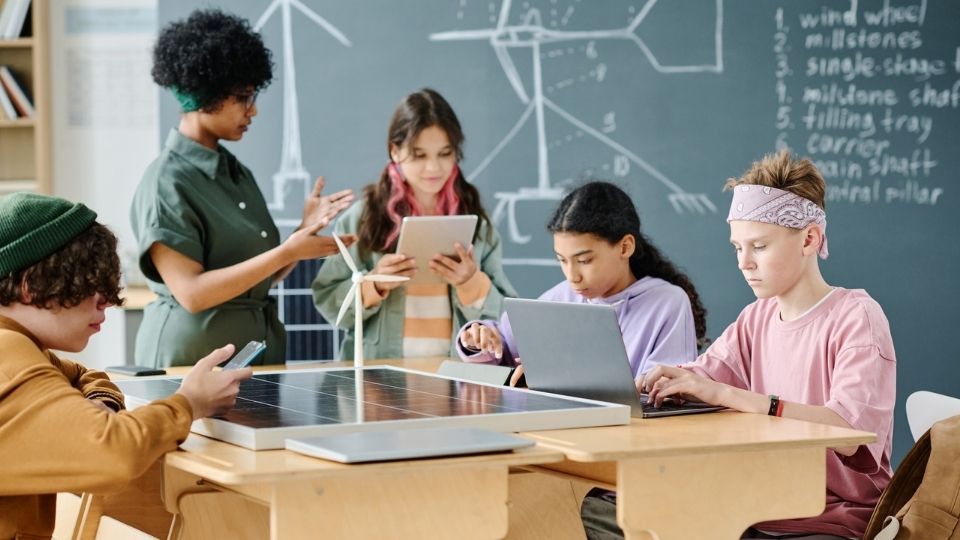
So you’ve heard teachers or tech people talking around the term “classroom 30x” and wondered what it means. Classroom 30x is a new way of thinking about how students learn.
It’s a modern approach that mixes technology with teaching to make learning interesting and personal.
Instead of everyone sitting in rows listening to lectures, classroom 30x brings in smart tools, AI, and interactive stuff that keeps students learning in fun ways.
The “30x” part isn’t some random number but it represents an idea of exponential improvement.
We’re talking 30 times better engagement, 30 times faster understanding, 30 times effective outcomes.
Schools are moving away from the old boring methods and racing toward something that works for how kids learn today.
The speed of change is wild and exciting if you care about education.
Here in this post, I’m breaking down what classroom 30x means, what features make it different, how it works in real schools, the tech behind it, and the good AND the bad parts. So, let’s go and see.
What Do You Understand By “Classroom 30X”?
Classroom 30x isn’t a product you can buy off a shelf. It’s like a framework or a concept for what next-generation learning should look like.
The main focus are the three big things: personalization, interactivity, and scalability.
Every student learns differently. Some kids are visual learners, others need to hear things, some need to DO things to understand.
Classroom 30x tries to meet each student.
It brings in digital tools like AI tutors, smart boards, virtual reality headsets, cloud platforms, and learning management systems.
Teachers stop being the “sage on the stage” and become like guides or coaches.
Students aren’t only listening but they’re actively participating, asking questions, working on projects, and learning at their own pace.
The key elements that make classroom 30x work are simple. First, it boosts engagement because interactive tools are more interesting than textbooks.
Second, it improves learning outcomes because students can move faster or slower based on what they need.
Third, it makes learning accessible from anywhere.
And fourth, it prepares students for the real world where everything runs on technology.
Features Of Classroom 30X
The features of classroom 30x are what separate it from traditional classrooms.
These aren’t only add-ons but they’re built into how the system works and they change how teaching and learning happen day to day.
Value and Relevance
Students learn better when they see the point. Classroom 30x connects lessons to real-world situations using current examples and practical applications.
Instead of asking where it will get used, students SEE how math or science or writing applies to jobs, problems, and life. The content stays fresh and relevant.
Student Engagement
Traditional classrooms lose students’ attention fast. Classroom 30x uses gamification like points, badges, leaderboards and challenges.
It sounds simple but it WORKS. Students want to level up, beat their own scores, and see progress.
Interactive displays let multiple students work on problems.
Real-time polls and quizzes keep everyone involved instead of the three kids in front who always raise their hands.
Teaching Practices
Teachers shift from lecturers to facilitators.
They’re moving around, checking in with students, offering help where needed, and letting the technology handle some of the repetitive stuff like grading basic quizzes or tracking who’s behind.
This frees them up to TEACH instead of doing paperwork.
Customizable Learning
Every student gets a learning path that fits them. If you’re crushing math, you move ahead.
If you’re struggling with fractions, you get extra practice and different explanations until it clicks.
AI tools can recommend specific lessons or activities based on what you’re good at and what you need help with.
Tracking and Analysis
Teachers get real-time data on how students are doing. Not only test scores at the end of a unit but continuous feedback.
They can see which concepts students are struggling with and adjust their teaching RIGHT THEN instead of weeks later.
Parents can log in and see progress too.
Collaborative Learning
Students work on group projects using shared documents and apps. They can collaborate even when they’re not in the same room.
Digital tools make teamwork easy and teach skills they’ll need for any job they’ll have in the future. Communication and cooperation get built into the daily routine.
How Does “Classroom 30X” Work?
Schools or districts set up infrastructure like smart boards, devices for students which can be tablets or laptops, reliable internet, and a learning management system that ties everything together.
Teachers get training on how to use these tools effectively because having the tech doesn’t help if no one knows what to do with it.
Students log into platforms where they can access lessons, assignments, videos, interactive activities, and resources.
The system tracks their progress automatically. If a student is taking too long on a concept or getting answers wrong, the AI flags it and offers help or notifies the teacher.
Classes become a mix of online and offline activities. Like students watch a video lesson at home, then come to class ready to work on projects or ask questions. Or they work through problems on tablets while the teacher walks around helping.
Tests can be adaptive, if you’re doing well, questions get hard; if you’re struggling, they adjust to find where you need support.
The teacher dashboard shows everything like who’s ahead, who’s falling behind, which topics need time, what’s working and what isn’t.
Types of Technology in Classroom 30X
The tech powering classroom 30x is impressive but also increasingly common.
Here’s what’s being used in schools around the world.
Artificial Intelligence
AI is the brain behind personalized learning. Machine learning algorithms analyze how students interact with content and adjust accordingly.
AI tutors can answer questions 24/7. They can grade some types of assignments and give feedback.
They notice patterns that humans miss, like a student consistently struggling with one type of problem.
Virtual Reality and Augmented Reality
VR and AR make learning immersive. If you want to understand ancient Rome then put on a VR headset and walk through it or study the solar system, then AR can project planets around your classroom in 3D.
This stuff isn’t science fiction anymore. Schools are using it and students love it because it feels like playing instead of studying.
Internet of Things
IoT means smart devices connected to networks. Smart boards that remember everything written on them.
Sensors that adjust classroom lighting and temperature for optimal learning conditions.
Devices that track attendance automatically. It’s the small connected pieces that make the classroom work smoothly.
Cloud Computing
Everything lives in the cloud. Students can access materials from home. Teachers can update lessons from anywhere and the homework is online too. Cloud platforms also make it easy to share resources between teachers and between schools.
Learning Management Systems
LMS platforms like Canvas, Google Classroom, or Blackboard are the central hub.
They organize the content, assignments, grades, communications, and resources in one place.
Everyone knows where to go for what they need. It keeps things organized instead of scattered across emails, papers, and random websites.
Benefits and Challenges of Classroom 30X
Like anything, classroom 30x has amazing advantages and real problems that need solving.
Benefits:
- Students stay more interested and motivated
- Learning outcomes improve with personalized pacing
- Access to resources anytime from anywhere
- Prepares students for tech-heavy workplaces
- Reduces boring administrative work for teachers
- Supports different learning styles and needs
- Gives parents visibility into student progress
- Makes collaboration natural and easy
- Uses data to improve teaching constantly
Challenges:
- Very expensive to implement properly
- Not all students have equal access to devices and internet at home
- Teachers need significant training and ongoing support
- Data privacy concerns are real and serious
- Risk of students becoming too dependent on technology
- Can widen the gap between well-funded and struggling schools
- Requires constant tech support and maintenance
- Some traditional skills might get lost
- Screen time concerns for younger students
Conclusion
Classroom 30x represents where education is heading. It’s not perfect and it’s definitely not cheap or easy to set up right.
But the core idea makes sense, using technology to make learning personal, engaging, and effective.
Not every school looks like this in five years. But the schools that figure out how to blend great teaching with smart technology are going to give their students an advantage.
The world isn’t slowing down and education needs to keep up.
The goal isn’t to replace human connection with screens.
It’s to use tools that help teachers teach better and help students learn instead of memorizing for tests.
If classroom 30x can do that and early results suggest it can.