
Interior design is not only about beautiful homes, luxury hotels, or perfect rooms on social media.
For many interior design students, the first real classroom is much smaller, messier, and more personal: the dorm room. A real dorm is not a blank magazine page.
It has rules, limited space, old furniture, strange lighting, shared walls, and a tight budget. But that is exactly what makes it such a powerful place to practice style.
Think about it. Anyone can design a dream room with unlimited money and total freedom. But can you create comfort, personality, and function in a room barely big enough for a bed, desk, and wardrobe? That is where real design skill begins.
Dorm rooms teach students how to solve problems, not just decorate.
For interior design students, dorms are like small design labs.
They test ideas, make mistakes, change layouts, mix colors, and learn what works in daily life.
The room is not only a place to sleep. It becomes a portfolio piece, a mood board, a workshop, and sometimes even a personal brand.
Why Real Dorms Are Perfect Design Labs
A dorm room may look simple at first, but it is full of design challenges.
Interior design students quickly learn that real spaces do not always follow perfect plans.
Walls may be plain, furniture may be fixed, and storage may be almost impossible. However, these limits push creativity.
In design school, students study balance, scale, rhythm, color theory, lighting, and materials, but understanding these ideas is not always easy.
Assignments can be hard, especially when students have to manage sketches, research, presentations, and real-life practice at the same time, so using helpful academic support from a privacy-focused platform at https://edubirdie.com/do-my-assignment can support them when the pressure feels too much.
In a dorm, they can then test design ideas in real life, such as learning that dark colors may make a small room feel cozy, while too much dark fabric can make it feel heavy.
Another student may discover that a large rug can visually connect the bed and desk area, making the whole room feel more complete.
Dorms also teach students about human behavior.
A room may look amazing on the first day, but does it still work after two weeks of classes, laundry, late-night studying, and friends visiting? Good design is not only pretty. It must support real life.
This is why dorms are so useful. They force students to ask smart questions.
Where do I put my books? How do I make my bed area feel private? Can I create a study corner without making the room feel crowded? How can I show my personality without breaking campus rules?
These questions may sound small, but they are the foundation of interior design.
Every professional designer faces limits. Clients have budgets.
Homes have awkward corners. Offices need storage. Hotels need durability. A dorm room gives students early practice with these real-world problems.
Turning Tiny Spaces Into Big Style Statements
Small rooms demand careful thinking. In a dorm, every object must earn its place. Interior design students learn that style is not about filling a room with trendy items. It is about making clear choices.
A tiny space can become stylish when it has a strong idea behind it.
Some students create a calm, minimal room with soft neutrals, clean bedding, and simple wall art. Others prefer a bold look with bright colors, layered patterns, and fun accessories.
The key is not choosing one “correct” style. The key is creating a room that feels intentional.
One common trick is zoning. Even in a small dorm, students can create different areas for sleeping, studying, relaxing, and getting ready.
They may use rugs, lighting, curtains, shelves, or furniture placement to separate these zones. A desk lamp can define the study area.
A throw blanket and pillows can make the bed feel like a sofa during the day. A small mirror and storage basket can create a mini dressing corner.
This kind of practice helps students understand space planning. They learn that a room is not just square footage. It is movement, comfort, and purpose.
Working With Layouts That Actually Make Sense
A beautiful room that blocks the door or makes it hard to reach the desk is not successful.
Interior design students use dorms to practice layouts that feel natural. They think about walking paths, furniture size, and daily habits.
For example, placing the desk near natural light can make studying more pleasant.
Keeping storage close to the bed can make the room easier to maintain.
Raising the bed, when allowed, can open up space underneath for bins, shoes, or extra seating.
Students also learn the value of negative space. In simple words, this means empty space.
A dorm does not need to be packed from wall to wall. Empty space gives the eye a place to rest. It also helps the room feel bigger and cleaner.
Using Color, Texture, and Light Without Overdoing It
Color can completely change a dorm room. Interior design students often use dorms to test color psychology.
Soft blue may feel calm. Yellow may feel cheerful. Green may bring a natural feeling. Black and white may create a modern look.
However, they also learn that too much color can become tiring. That is why many students start with a simple base, such as white, beige, gray, or soft wood tones.
Then they add stronger colors through pillows, posters, lamps, or bedding. This makes the room easier to update later.
Texture is another important tool. Since dorm rooms often have flat walls and basic furniture, texture adds depth.
A woven blanket, soft rug, cork board, linen curtain, or metal lamp can make the room feel more layered.
It is like adding different instruments to a song. One sound is fine, but many sounds create richness.
Lighting also matters. Many dorm rooms have harsh overhead lights that make everything feel cold.
Students often use desk lamps, string lights, floor lamps, or clip-on lights to create a warmer mood. Through this process, they learn that lighting is not only practical. It shapes emotion.
How Students Test Personal Style on a Student Budget
Most interior design students do not have a huge budget. In fact, budget limits are part of the learning process.
They teach students how to be resourceful, creative, and realistic.
Instead of buying everything new, students often mix affordable pieces with DIY projects and secondhand finds.
A plain storage box can be covered with fabric. An old chair can get a new cushion.
Simple frames can turn postcards, sketches, or fabric samples into wall art. Even a basic pinboard can become a stylish display for color palettes, photos, and design inspiration.
This practice is valuable because many future clients will also have budgets.
A designer must know how to create impact without wasting money. Dorm design teaches students to focus on the details that matter most.
For example, changing bedding can quickly shift the mood of the whole room.
Adding one large piece of art can make a stronger statement than many small decorations.
Choosing matching storage containers can make open shelves feel organized. These are small moves, but they can create a big visual effect.
Students also learn how to avoid impulse buying.
A cute lamp or trendy poster may look great in the store, but does it fit the room’s overall style? Does it serve a purpose? Does it match the color story? Dorm rooms teach students to edit. And editing is one of the most important design skills.
Personal style develops through trial and error.
A student may begin with a boho look, then realize they prefer Scandinavian simplicity.
Another may try industrial style, then soften it with warm colors and plants.
This process is not failure. It is growth. Style is like handwriting. It becomes clearer the more you use it.
Dorm Rules, Shared Spaces, and Real-Life Design Problems
Dorm design is not only about personal taste. Students must also work around rules.
Many campuses do not allow painting walls, drilling holes, using candles, or changing fixed furniture. At first, this can feel frustrating. But for interior design students, restrictions are design exercises.
Removable hooks, peel-and-stick wallpaper, washi tape, tension rods, and lightweight decor become useful tools.
Students learn how to create a strong look without permanent changes.
This skill matters in rental apartments, temporary housing, and commercial spaces where changes may be limited.
Shared dorm rooms add another layer of challenge. When two people live in one small room, style becomes a conversation.
One roommate may love bright colors, while the other prefers neutrals. One may want a cozy, layered space, while the other likes a clean and simple room.
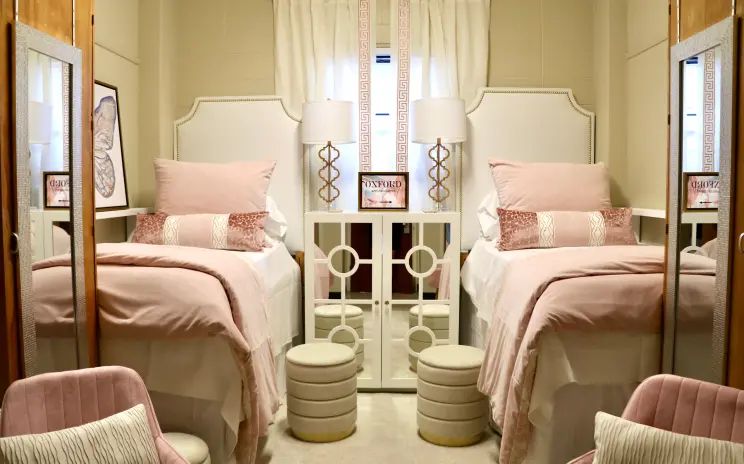
Interior design students learn how to balance different tastes. They may suggest a shared color palette, matching storage, or separate personal zones.
This is similar to working with real clients. Designers must listen, compromise, and create spaces that serve more than one person.
Function also becomes a serious issue. Dorm rooms must support studying, sleeping, eating, socializing, and relaxing. That is a lot for one small area.
Students learn to choose flexible items, such as storage ottomans, foldable chairs, rolling carts, and desk organizers.
They also learn about maintenance. A room may look perfect for photos, but can it stay clean? Are the storage systems easy to use? Does the layout help or hurt daily routines? Real dorm life gives honest feedback.
If something does not work, students notice quickly.
This is where theory meets reality. A design idea may look beautiful on paper, but daily life will test it. In that way, dorm rooms become honest teachers.
Building Confidence and Design Identity Through Dorm Practice
Practicing style in a real dorm helps interior design students build more than a nice room.
It helps them build confidence. Every choice becomes a lesson. Every mistake becomes useful.
Every small success proves that they can shape a space with intention.
Dorm rooms also help students create early portfolio content. Before-and-after photos, mood boards, layout sketches, and styling experiments can show growth. A well-designed dorm may not be a luxury project, but it can still show creativity, problem-solving, and personal vision.
More importantly, dorm design helps students understand themselves as designers.
Do they love calm spaces or dramatic ones? Are they drawn to natural materials, bold patterns, vintage pieces, or modern lines? Do they care most about comfort, beauty, function, or storytelling? The answers often appear through practice.
A dorm room is like a small stage where students rehearse for bigger projects.
The bed, desk, rug, lamp, and wall art may seem simple, but together they teach powerful lessons.
Students learn to see space differently. They stop asking, “How can I decorate this?” and start asking, “How can this room work better and feel better?”
In the end, real dorms give interior design students something no textbook can fully provide: experience.
They teach patience, creativity, budgeting, planning, communication, and flexibility.
A dorm may be small, but the lessons inside it are huge.
For students learning the art of style, the dorm room is not just a place to live. It is the first real canvas where their design voice begins to grow.