

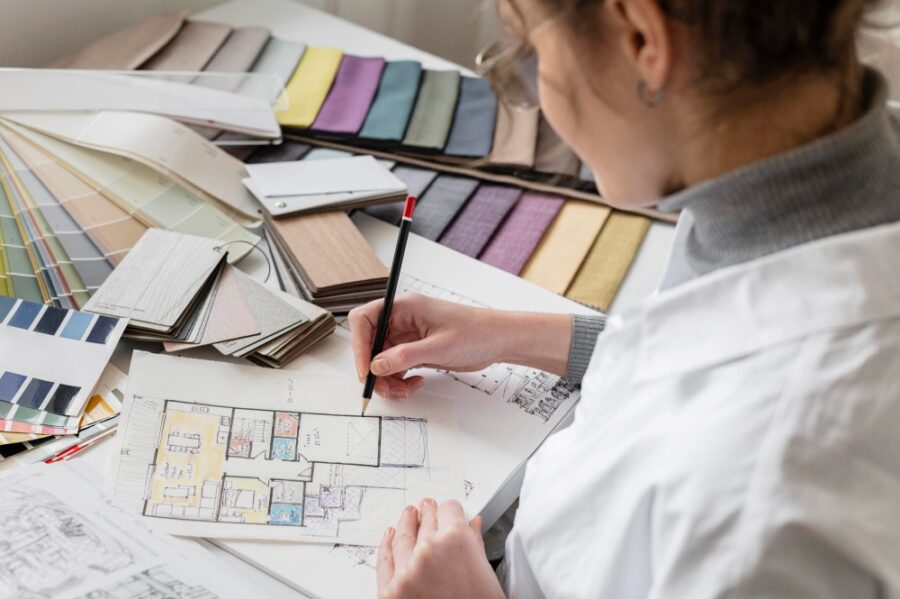
If you want to deliver fantastic results as a contractor, then you’ll need to be able to call upon the right materials.
Through your choice of materials, you’ll be able to improve the performance of your structure, reduce its impact on the natural world, and eliminate the need for reworking.
Early material planning
The earlier you start planning the materials you use, the less likely you’ll be to run into problems with waste and miscommunication.
You’ll be able to lay out what’s required in terms of resources, and the level of risk that you’re comfortable with.
It might be that discussions with your client indicate that you need a change of direction – but it’s better to learn this early on.
Every project represents something of a balancing act when it comes to quality and cost.
What matters is that your client is aware of the potential costs, and that you aren’t going to need to readjust later on.
Evaluating Performance Helps Contractors Reduce Rework
Ideally, your initial planning should provide you with the criteria you need to judge whether your chosen materials are actually going to be effective, and meet the needs of the client.
You might think about paying extra for extra durability, ease of installation, environmental soundness, and more. For example, moisture-resistant drywall board might allow you to avoid problems with your finish.
Certifications Support Better Specification Decisions
Of course, not every client or contractor will be able to judge whether a given project is up to spec.
This is where third-party frameworks and certifications can play such an essential role.
For example, the Leadership in Energy and Environmental Design rating system might help you to not only select materials that meet your criteria, but also to demonstrate to your client that you’ve made the right choices.
The system is designed to be applied to projects of all types and phases, ranging from retrofits to entirely new structures.
New Material Innovations Enhance Interior Performance
Many of the materials we use, like steel, bricks, and clay, have been around for hundreds, if not thousands, of years. But even older materials are being continuously developed and refined, and so it’s worth being aware of the latest innovations.
For example, you might make use of recycled metals, or FSC-certified timber, to reduce the impact of your building on the natural world. The result, ultimately, might be a building that lasts longer and performs better.