
So here’s something most people don’t realize when they’re picking out radiators – you actually don’t have to choose between something that looks good and something that heats properly.
A lot of homeowners think it’s one or the other, but that’s not really how it works anymore.
The thing is, radiators have changed a lot over the past 15 years or so.
You’re not stuck with those old cast-iron monsters that your grandmother had, even though those actually work pretty well.
Now you can get radiators that look like art pieces while still pumping out serious heat. But you need to know what you’re doing because not all stylish radiators actually perform well, and that’s what I want to break down here.
How To Combine Radiator Style With Heating Performance
The biggest mistake I see people make is they’ll walk into a showroom, see something that looks incredible, and just buy it without checking the actual BTU output. Or they’ll do the opposite – focus only on heating capacity and end up with something that works great but looks terrible in their space.
You need both. And the good news is that with modern manufacturing, you can actually get both if you know what to look for.
Understanding Modern Radiator Design
So modern radiator design has split into a few different categories.
You’ve got your traditional column radiators, which still work on the same basic principle but come in way more styles now.
Then there’s flat panel radiators, which are popular because they have a clean, minimal look. And then you’ve got designer radiators, which is basically a catch-all term for anything that looks more like a sculpture than a heater.
The way these work hasn’t really changed though. Hot water flows through the radiator, heats up the metal, and that metal radiates heat into the room.
Pretty simple. But the shape and material of that metal makes a huge difference in how much heat you actually get.
Here’s what matters: surface area. The more surface area a radiator has, the more heat it can push out. That’s why those old column radiators with all their curves and sections were actually really efficient – tons of surface area.
Modern flat panels sacrifice some of that, but they make up for it by being larger overall and using better materials.
Choosing the Right Radiator for Your Space
So when you’re picking a radiator, you need to start with the room size. This isn’t optional.
A radiator that looks perfect might literally not be able to heat your room, and then you’ve just wasted money on a piece of metal that doesn’t do its job.
You calculate this in BTUs, which stands for British Thermal Units.
Different rooms need different amounts based on size, insulation, window count, all of that. A typical bedroom might need around 4,000 BTUs, but a large living room with big windows could need 8,000 or more.
Now here’s where style comes in. Once you know your BTU requirement, you can look at radiators that meet that number. And this is where it gets interesting because you have options.
Vertical radiators are great if you have limited wall space. They go up instead of out, and they can actually become a feature wall element.
I’ve seen these used in narrow hallways and behind doors where a horizontal radiator wouldn’t fit. The heating performance is identical to a horizontal model with the same surface area – it’s just arranged differently.
Column radiators give you that classic look but in modern finishes. Two-column, three-column, even four-column designs.
More columns means more heat output in the same width, but it also sticks out further from the wall.
Flat panel radiators are probably the most popular right now because they’re sleek.
They don’t protrude much, they look clean and modern. But – and this is important – they typically have lower BTU output per square foot than column radiators. So you might need a larger flat panel to match a smaller column radiator.
Materials Matter: Performance Meets Aesthetics
This is where people really mess up. They think all radiators are basically the same, just different shapes. Not true.
Steel radiators are the most common.
They heat up fast, they’re relatively lightweight, and they’re affordable. The downside? They cool down fast too. Once your boiler stops running, a steel radiator loses heat pretty quick. For most homes, this is fine because modern thermostats cycle on and off efficiently anyway.
Cast iron is the old-school option, and honestly, it still has advantages. These are heavy – like really heavy. But they hold heat for a long time after the water stops flowing through them. That’s called thermal mass, and it means your room stays warm longer between heating cycles.
The trade-off is they take longer to heat up initially and they’re way more expensive.
Aluminum radiators are interesting. They heat up even faster than steel, which makes them very responsive.
You turn on the heat, boom, the room warms up. But they also cool down the fastest. These work well if you need quick heat in a space you use sporadically.
Stylish radiators for modern interiors are not just about appearances; they serve practical purposes while enhancing the aesthetic of a room. Consider a few key benefits like faster heat response in aluminum models or longer heat retention in cast iron designs.
Boosting Heating Performance Without Sacrificing Style
So you’ve picked a radiator that looks good and has the right BTU rating for your room. Now let’s talk about getting the most out of it.
Placement is huge. You want your radiator on an exterior wall, ideally under a window.
I know that’s not always where it looks best, but there’s a reason for this. Cold air comes in through windows, and the radiator heats it right away before it spreads through the room.
This creates better circulation and makes the heating more efficient overall.
But if you absolutely need the radiator somewhere else for design reasons, you can make it work. Just be aware the room might heat less evenly.
Reflective panels behind the radiator are one of those things that actually work. You stick a reflective panel on the wall behind the radiator, and it bounces heat back into the room instead of letting it soak into the wall.
This is especially helpful on exterior walls. The panels are cheap, easy to install, and you can’t even see them once they’re up.
Radiator covers are tricky. They can look great, but most of them kill your heating performance.
A solid cover blocks heat from radiating out. If you really want a cover, get one that’s mostly open – more like a decorative screen than a box.
The air needs to flow through and around the radiator, not get trapped behind a wooden cabinet.
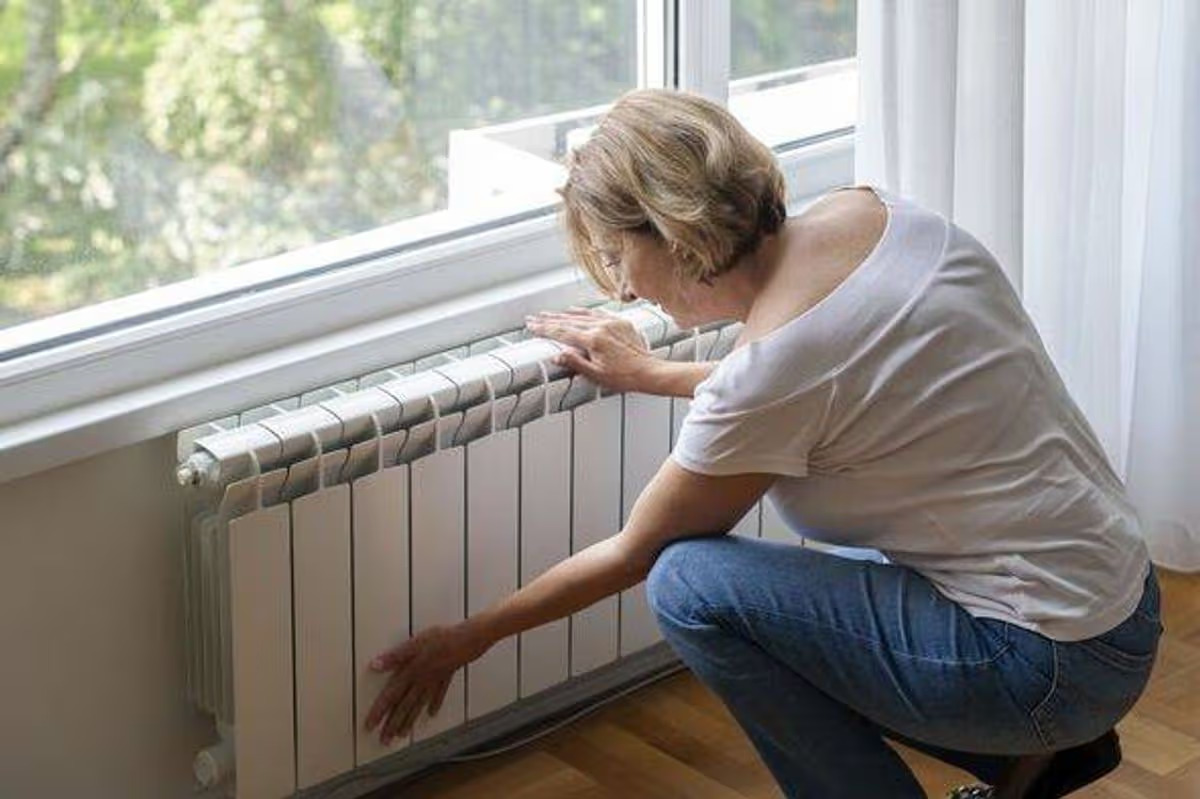
Bleeding your radiators is basic maintenance but people forget to do it. Air gets trapped in the system, and that air stops hot water from filling the whole radiator. You end up with cold spots, usually at the top. Once a year, use a radiator key to let that air out. Takes five minutes per radiator and can improve performance noticeably.
Enhancing the Visual Appeal
Here’s where you can get creative without hurting performance. Finishes and colors don’t change how a radiator works – they just change how it looks.
Standard white is fine, but it’s boring. Most manufacturers now offer radiators in dozens of colors.
Anthracite grey is really popular right now, gives a sophisticated look that works in modern spaces. Black radiators make a bold statement. Metallic finishes like brushed steel or copper can turn a radiator into a focal point.
You can even get custom colors powder-coated onto radiators. I’ve seen people match radiators to accent walls, or go for contrast with a bright color against neutral walls.
Texture matters too. Smooth finishes feel contemporary. Hammered or textured finishes add visual interest and can help radiators blend with industrial or rustic design schemes.
Designer shapes are where things get fun. Ladder-style radiators in bathrooms double as towel warmers – practical and stylish. Sculptural radiators can look like modern art. Wave patterns, geometric designs, even radiators shaped like trees or city skylines.
As long as the BTU output matches your needs, the shape is really just about what you like.
One thing I’ll say though – weird shapes can be harder to clean. Dust gets trapped in intricate designs. If you go for something sculptural, just know you’ll spend extra time keeping it clean.
Energy Efficiency and Cost Considerations
So let’s talk money because radiators aren’t cheap, especially the designer ones.
A basic steel panel radiator might run you $150-300 depending on size.
Mid-range column radiators are usually $300-600. Designer radiators? Sky’s the limit. I’ve seen radiators that cost $2,000 or more, and they don’t necessarily heat any better than a $400 option. You’re paying for design at that point.
But here’s the thing about efficiency – a better radiator can actually save you money long-term.
If your current radiators are old and inefficient, or if they’re undersized for your rooms, your boiler has to work harder and run longer to heat your home. That costs money every month.
Upgrading to properly sized, efficient radiators means your boiler cycles less.
The system reaches temperature faster and maintains it better. Over several years, that adds up.
Materials play into this too. Cast iron costs more upfront but holds heat longer, so your boiler doesn’t fire as often.
Steel is cheaper initially but might cost more to run over time, though the difference is usually pretty small in a well-insulated home.
Smart radiator valves are worth mentioning. These aren’t cheap either – maybe $50-100 per radiator – but they let you control each radiator independently.
You can keep bedrooms cooler during the day and living areas cooler at night.
This kind of zone control actually does save money if you use it properly. And it doesn’t change the look of your radiator at all, just swaps out the manual valve for a smart one.
Common Mistakes to Avoid
I’ve seen people make the same mistakes over and over, so let me save you some trouble.
First: Don’t buy a radiator based only on dimensions. Two radiators that are both, say, 600mm x 1200mm can have completely different BTU outputs depending on design and material. Always check the actual heat output numbers.
Second: Don’t block your radiators with furniture. I know it’s tempting to push a couch up against that wall, but you’re killing the heat circulation.
Leave at least 6-8 inches of space in front of radiators. Same goes for curtains – they shouldn’t drape over the radiator.
Third: Don’t mix radiator types randomly throughout your house without thinking about the system.
If you have mostly cast iron radiators on a heating system and then add one aluminum radiator, the aluminum one will heat and cool way faster than the others, which can throw off the balance of your whole system.
It’s not that you can’t mix types, but you need to account for it when setting up zones and valves.
Fourth: Don’t forget about valve placement.
Some designer radiators have connections in weird spots, and if your pipes come out of the floor in a different location, you’ll need to run extra piping or move things around. Check connection points before you buy.
Fifth: Don’t assume bigger is always better.
An oversized radiator in a small room will cycle on and off too frequently, which is actually less efficient and less comfortable than a properly sized one that runs steadily.
Conclusion
So here’s the bottom line – style and performance aren’t enemies when it comes to radiators. You just need to be smart about it.
Start with your heating requirements. Calculate what BTU output you actually need for each room.
Then look at radiators that meet those numbers and find the styles you like within that range. Check materials and understand the trade-offs between steel, cast iron, and aluminum.
Think about placement and how the radiator will fit into your room layout.
Make sure it’s positioned to heat efficiently even if that’s not the most convenient spot visually. Use tricks like reflective panels to boost performance without changing the look.
And don’t be afraid to spend a bit more on a radiator that you’ll actually like looking at every day.
These things last decades if you maintain them properly. A radiator that heats well and looks good is worth the investment because you’re stuck with it for a long time.
The market now has enough options that pretty much everyone can find radiators that work for their space both functionally and aesthetically.
You just need to do the homework upfront, check the specs, and make informed choices instead of impulse-buying based on looks alone.
Your home should be warm and it should look good. With modern radiators, you can have both. Just know what you’re looking for before you start shopping.