
Living in a tiny student room can feel like trying to fit your whole life into a suitcase.
You have books, clothes, tech, snacks, bedding, laundry, and maybe even a few plants fighting for space.
At first, it can seem impossible. Where does everything go? How do you sleep, study, relax, and store your stuff in one small room without feeling trapped?
The good news is that small rooms can become smart rooms with the right furniture hacks.
You do not need expensive designer pieces or a huge dorm makeover.
You just need creativity, flexible furniture, and a few clever tricks. Think of your room like a puzzle. Every piece should fit, and every item should earn its place.
Why Tiny Rooms Need Smart Furniture Hacks
Student rooms are often small because they are built for basic living, not luxury.
A bed, a desk, a chair, and a wardrobe may already fill most of the space.
Add your own belongings, and suddenly the floor disappears. This is why creative furniture hacks for students living in tiny rooms are not just “nice ideas.” They are survival tools.
Also, a tiny room can strongly affect your mood. When your space is messy, your brain often feels messy too, and when your mood is low, you may not have enough energy for studying, and assignment writing help can be very useful when you need the right support to keep going.
It becomes harder to focus, sleep well, or even invite a friend over. However, when your furniture is arranged well, your room feels calmer and bigger.
You may not get more square meters, but you can create the feeling of more space.
Also, a tiny room affects your mood. When your space is messy, your brain often feels messy too. It becomes harder to focus on assignments, sleep well, or invite a friend over.
However, when your furniture is arranged well, your room feels calmer and bigger. You may not get more square meters, but you can create the feeling of more space.
Another key point is movement. In a small room, you should be able to walk from the door to the bed, desk, and wardrobe without stepping over bags or boxes. Clear paths make the room feel organized.
So, before buying anything new, look at what blocks your movement. Is your chair always in the way? Is your laundry basket too large? Is your bedside table using space but not giving enough storage? Small questions like these lead to big improvements.
Start With Furniture That Does More Than One Job
Multi-purpose furniture is the best friend of any student living in a tiny room.
It saves money, saves space, and reduces clutter. Instead of owning five separate items, you can choose one item that performs several tasks.
For example, an ottoman with storage can be a seat, a footrest, a coffee table, and a place to hide cables, notebooks, or snacks.
A storage bench can sit at the end of your bed and hold gym clothes, towels, or extra bedding.
A foldable chair can be used when friends visit and then placed behind a door when you are alone.
One of the easiest hacks is to choose furniture with hidden storage.
Many students only use visible storage like shelves and drawers. But hidden storage is powerful because it keeps your room looking clean.
When your things are out of sight, the room instantly feels less crowded.
Another great idea is to use nesting furniture. Nesting tables, stackable stools, and collapsible crates are perfect because they shrink when not in use.
They are like furniture with a magic trick. When you need them, they show up. When you do not, they step aside.
Turn Your Bed Into a Storage Zone
Your bed is probably the largest piece of furniture in your room, so it should not waste space.
The area under your bed is prime real estate. If it is empty, you are missing a huge storage opportunity.
Use flat storage boxes under the bed for items you do not need every day.
These can include seasonal clothes, spare bedsheets, bags, documents, or shoes.
Clear boxes are helpful because you can see what is inside without opening everything.
If your bed is too low, bed risers can lift it a few inches and create more storage space. This simple hack can completely change your room.
You can also add a bedside caddy instead of using a bulky nightstand.
A fabric caddy hangs from the side of your bed and can hold your phone, charger, notebook, glasses, headphones, and water bottle.
It gives you the function of a bedside table without taking floor space.
Another smart trick is using a headboard with shelves.
If buying one is too expensive, you can place a narrow shelf behind or above your bed. Just make sure it is safely attached.
This gives you room for books, a lamp, small decorations, or study supplies. Your bed becomes more than a sleeping spot; it becomes a storage station.
Choose Desks and Tables That Disappear
A desk is important for student life, but it can also eat up space.
Marketing students often use laptops for research, presentations, online classes, or marketing assignment help, so a folding wall desk can be a smart choice in a very small room.
It opens when you study and closes when you finish, giving you more freedom to move around.
Another option is a slim desk with shelves above it. Instead of spreading sideways, your study area grows upward.
This leaves more floor space open. You can store books, pens, folders, and a small printer on vertical shelves rather than across the desk surface.
A rolling table is also useful. You can move it beside your bed, use it for studying, eating, or working on a project, and then push it into a corner.
Furniture with wheels gives you flexibility, and flexibility is gold in a tiny room.
If you already have a desk, try adding a monitor stand or small shelf on top. This creates an extra layer of storage.
You can place your laptop or monitor above and keep notebooks, sticky notes, or your keyboard underneath.
It is a small change, but it frees up your work surface.
Use Vertical Space Like a Second Floor
When floor space is limited, walls become your best storage area.
Many students forget about vertical space, but walls can hold a surprising amount. Shelves, hooks, pegboards, and hanging organizers can turn empty walls into useful zones.
Start with wall shelves. Floating shelves are perfect for books, plants, small boxes, and decorations.
They make your room feel personal without using floor space.
Place them above your desk, above your bed, or near the door. However, avoid filling every wall. Too much wall storage can make a room feel busy.
The goal is balance, not chaos.
Hooks are another simple but powerful hack. Put hooks behind the door for coats, bags, scarves, or towels.
Add adhesive hooks near your desk for headphones, keys, or charging cables.
You can also use S-hooks on a rail to hang baskets or small containers. This keeps little items from spreading across your desk like ants at a picnic.
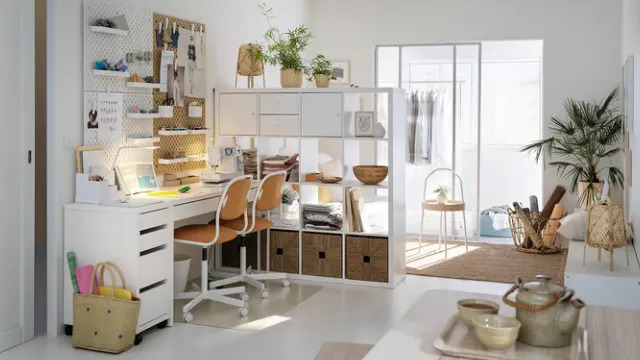
A pegboard is a great choice for students who need flexible storage. You can hang scissors, cables, pens, headphones, small shelves, and even mini baskets.
The best part is that you can change the layout whenever your needs change. It is like having a wall that listens to you.
Do not forget the wardrobe door. The inside of a wardrobe or closet door can hold a hanging shoe organizer. But you do not have to use it only for shoes.
It can store toiletries, socks, chargers, snacks, cleaning supplies, or art materials. Each pocket becomes a mini drawer.
Tall furniture also helps. Instead of a wide bookshelf, choose a tall narrow shelf. Instead of a low dresser, choose vertical storage drawers. In small rooms, height is your friend.
Use it wisely, and your floor will finally breathe.
Create Zones Without Adding Walls
A tiny room often has to be a bedroom, study room, dressing area, dining corner, and relaxation space all at once. That can feel confusing.
One moment you are trying to study, but your bed is calling your name. The next moment you want to sleep, but your desk reminds you of unfinished work.
Creating zones helps solve this problem. You do not need real walls. You just need visual separation.
For example, place your desk near a window or in a corner and keep all study items there.
Use a small rug beside your bed to mark the sleeping area. Keep your relaxation items, like a cushion or reading lamp, in one specific spot.
A bookshelf can work as a room divider if your room allows it. Choose an open shelf so light can pass through.
It separates your bed from your desk without making the room feel closed.
You can also use a curtain or folding screen, but avoid anything too heavy because it may make the room look smaller.
Lighting is another clever way to create zones. Use a bright lamp for your study area and a softer light near your bed.
Your brain will begin to connect each space with a different activity. Bright light says, “Focus.” Warm light says, “Relax.”
Furniture placement matters too. Try not to place your desk directly facing your bed if you get distracted easily.
If possible, face your desk toward a wall, window, or shelf. This creates a mental boundary between study time and rest time.
Even color can help. Use matching boxes, baskets, or desk accessories in one area to give it a clear identity.
Maybe your study zone uses white and blue, while your sleep zone uses beige and green. These small visual signals make the room feel more planned and peaceful.
Budget-Friendly DIY Hacks That Make Student Life Easier
You do not need a big budget to make a tiny room work better. Some of the best furniture hacks are cheap, easy, and surprisingly effective.
With a little imagination, everyday items can become smart storage tools.
One simple idea is turning wooden crates into shelves or bedside tables.
Stack two crates and secure them safely, and you have a custom storage unit.
You can paint them to match your room or leave them natural for a relaxed look.
Crates are useful because they can be rearranged when your room layout changes.
Another cheap hack is using tension rods. Place one inside a wardrobe to create an extra hanging level.
Use one under a desk to hang small baskets. You can even place a tension rod between two surfaces and hang lightweight curtains to hide storage boxes. It is a small tool with many talents.
Binder clips are also helpful for cable management. Attach them to the edge of your desk and run charging cables through the metal loops.
No more crawling under the bed to find your charger. This tiny hack can save you daily frustration.
For students with many shoes, try a vertical shoe rack or hanging shoe organizer.
Shoes take more space than people expect, especially when they spread across the floor. Keeping them vertical makes the room look cleaner instantly.
A rolling cart is another budget-friendly hero.
It can hold skincare, snacks, school supplies, art tools, or kitchen items. Because it moves, it can serve different purposes during the day.
In the morning, it might be a coffee station. In the afternoon, it becomes a study cart. At night, it can sit beside your bed like a mini nightstand.
You can also make your furniture look lighter by choosing pieces with open legs instead of solid bases.
When you can see more floor under the furniture, the room feels bigger. This is a visual trick, but it works.
Heavy furniture can make a tiny room feel like a crowded elevator. Light furniture makes it feel more open.
Finally, build a habit of reviewing your room every month. Student life changes fast.
One month you need space for textbooks; the next month you need space for project materials or winter clothes. Your furniture setup should change with you. A tiny room is not a fixed problem. It is a flexible system.
Living in a tiny room as a student does not mean living in discomfort. With creative furniture hacks, your small space can become practical, cozy, and even stylish.
Use your bed for storage, choose furniture that folds or moves, build upward with shelves and hooks, and create zones that support your daily routine.
Your room may be small, but your ideas do not have to be.
When every piece of furniture has a purpose, your tiny room can feel less like a box and more like a smart little home.