

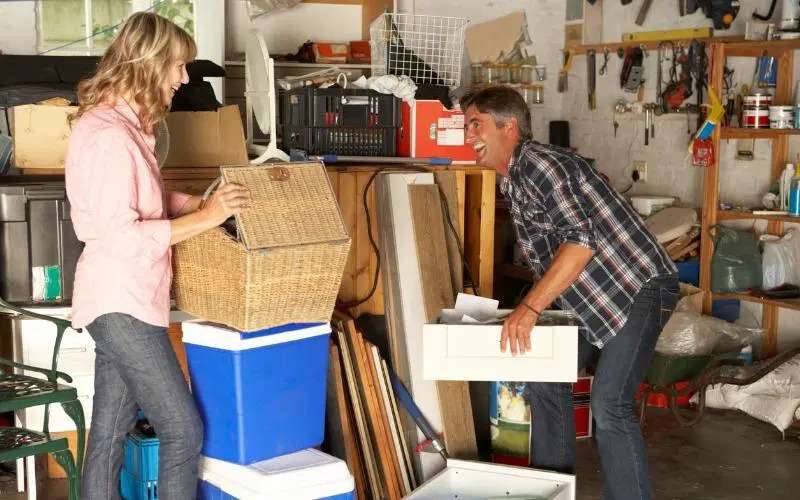
Look, I’m not going to pretend garage cleaning is fun.
It’s not. It’s dusty, it’s time-consuming, and you’ll find things you forgot you owned.
Like that meter stick your partner swears they’ll need someday. Or seventeen half-empty containers of wood filler.
But here’s what I’ve learned after years of working with homeowners and documenting home transformations: your garage says a lot about how you live. And when it’s a disaster? Everything else feels harder.
This guide comes from real experience. Not the kind where someone cleans an already-organized space for photos. The kind where you’re standing in actual chaos, wondering where to start.
How To Clean Garage And Transfer Cluttered Space
Understanding Common Garage Clutter Problems
The garage becomes a catch-all. That’s the real issue.
You finish a project, drop everything wherever there’s space.
Buy seasonal items decorations, stack them in corners.
Move into a house and inherit the previous owner’s storage system—their logic, their leftover supplies, their weird collection of things you’re still sorting through years later.
We lived like that. Four years in our house, still working through someone else’s stuff.
The main problems aren’t actually about having too much. They’re about:
- No clear system for where things go
- Mixing active workspace with storage
- Keeping things “just in case” without any organization
- Dust covering everything because the space does double duty
- Not enough shelving, so everything lives on the floor
And the truth? Sometimes the person using the garage most is the one who keeps too much. Andrew would save every piano hinge, every shim box (yes, a box specifically for shims that no longer contained shims), every piece of scrap material.
You can’t organize effectively when someone insists everything is essential.
Preparing for a Successful Garage Cleaning
Don’t start on a day when everyone’s home.
I’m serious. If your garage belongs to someone who “might need that,” plan your initial purge when they’re out.
You’re not throwing away anything important—you’re making space to see what you actually have.
Here’s what you need before starting:
Time. This isn’t a weekend project. It’s a several-days project. Maybe a week if you’re really doing it properly. Stop expecting Instagram-worthy results in three hours.
Storage solutions. We went with the Husky shelving system from Home Depot. Same one we used in our upstairs garage. Easy to assemble, holds serious weight, and you can configure it however works for your space.
Containers. Get totes in multiple sizes. Clear ones if you want to see inside. We grabbed the Home Depot ones—they’re sturdy and stackable. Also picked up smaller plastic containers (like 96 cents each) for organizing tiny things. Screws, nails, whatever.
Labeling system. I got one of those mini label makers that connects to your phone. Makes the whole process faster. You can do the preset labels or make custom ones.
Realistic expectations. Your garage won’t stay perfect. If it’s your workshop, it’ll get messy again. The goal is creating a system that makes it easier to reset.
Step-by-Step Garage Cleaning Process
Empty one side completely.
Don’t try to organize while things are still in place. You need to see the space empty. We moved everything to one side of the garage first. Yes, it looked worse before it looked better.
Sort as you empty. Three categories: keep, toss, donate. Except you’ll actually have five categories because you’ll also create “I don’t know what this is,” “Andrew will kill me if I throw this out,” and “why do we have four of these?”
That’s normal.
Get rid of the garbage immediately. Don’t let it sit. We filled bags and bags of actual trash. Broken tools, dried-up adhesives, mystery hardware that didn’t belong to anything.
Group similar items together. All the wood filler in one spot (we had nine containers, by the way). Edge banding together. Fasteners together. Power tool accessories together.
This is where you realize how much you’ve been buying duplicates because you couldn’t find what you already owned.
Clean the empty space. I’m talking actually clean.
Vacuum the cobwebs. Wipe down surfaces. If you have a Bissell Steam Shot—yeah, I got influenced by TikTok—use it on shelving and walls.
For floors, I used a spin brush from Amazon with an extender. Then hit it with a proper mop.
Our garage has a drain, so I could really scrub it down. If yours doesn’t, you’ll need to be more careful about water.
Install your storage system. This takes longer than you think.
Building shelving units isn’t hard, but it’s time-consuming. I knocked out several units in one day, but we needed them along two full walls.
Start organizing. Put your grouped items into containers. Label everything.
We labeled renovation supplies, building materials, hardware, electrical, plumbing—basically creating zones for different project types.
Some people suggested QR codes for containers. I couldn’t be bothered. I’d rather just see what’s in them right away.
Organizing Your Garage for Maximum Efficiency
Here’s where function matters more than aesthetics.
Your garage needs to work for how you actually use it. Not how home organization accounts say you should use it.
Create zones based on frequency.
Things Andrew grabs constantly? Front and center, easy access. Seasonal decorations? Upper shelves in the back.
Building supplies for future projects? Labeled and stacked where we can see what we have.
Keep your workspace clear. If you’re cutting materials, that area needs to stay empty.
We designated one whole side just for workspace. No storage creeping into it.
Use vertical space aggressively. Walls are your friend.
We have the shelving system wrapping around, a lumber rack for extra wood and building materials (that one came with the house, thankfully), and Milwaukee Packout systems mounted where Andrew can grab them.
By the way, if Milwaukee wants to sponsor us, we’re very available.
Make everything visible. This is why clear containers or labeled ones matter. When you can’t see what you have, you buy duplicates. We were guilty of this with so many supplies.
Accept that it won’t look like a magazine. Our garage is functional.
The layout isn’t aesthetically perfect. The charging station for batteries almost looks like a fire hazard. But it works for us, and that’s what counts.
Dealing With Special Garage Challenges
Dust management. Our garage is where we cut everything. Dust covers everything constantly, including us. There’s no perfect solution, but here’s what helps:
Clean surfaces regularly with a vacuum.
Use containers with lids for things you don’t access daily. Consider whether your workspace should actually be in your garage long-term.
Honestly? We’re planning to eventually make part of our garage into living space and build a detached workshop.
When your workspace is attached to your house and generates that much dust, it affects everything.
Inherited storage systems. Buying a house with the previous owner’s stuff is… complicated. You’re working with their logic, their shelving, their collection of supplies.
We’re four years in and still sorting through it.
The workbench stayed. The lumber rack stayed. But we completely reorganized how things are stored because their system wasn’t ours.
Partner disagreements about what to keep. Andrew came home while I was organizing and discovered I’d tried to throw out a roller arm. “We have so many!” I said. “It’s a tray,” he argued.
This is why I mentioned cleaning when they’re not around.
Lack of drainage. We have two garages below and two above. The one I tackled has a drain.
The other doesn’t. That limits how aggressively you can clean floors. For spaces without drainage, use minimal water and focus on vacuuming and spot-cleaning.
Cobwebs everywhere. I vacuumed for so long. So long I stopped filming because it was just me, the vacuum, and endless cobwebs in corners.
Get a vacuum with a long attachment. Accept that you’ll miss some until you see them in different lighting.
Garage Cleaning Tips for Different Garage Types
Workshop garages: Function over form. Your tools need to be accessible.
Some people say if your tools are hung up on display, you don’t actually use them.
Andrew insisted I mention this because he does use his, even though I hung them nicely with the black and red coordinating.
Keep your workspace defined and clear. Store materials vertically when possible.
Complete overhaul cleaning transforms severely cluttered or neglected spaces with Supersonic Junk Removal.
Multi-purpose garages: These are tough. We have one that’s our home gym and storage for seasonal decor. It requires strict zones. Workout equipment in one area, totes on shelving in another, and nothing bleeds between them.
Vehicle parking garages: Funny thing—we have multiple garages and don’t park our vehicles in any of them. One has Andrew’s tractor. The others are workshops or storage. If you actually park vehicles, you need to keep the floor clear and use wall-mounted storage exclusively.
Attached vs. detached: Attached garages affect your home. Dust, temperature, smells—it all transfers. Be more careful about what you store and what activities happen there. Detached garages give you more freedom to make a mess.
Maintaining a Clean and Organized Garage
The system only works if you maintain it.
Here’s what actually works (not what sounds good in theory):
Return things to their labeled containers. Seems obvious. Doesn’t always happen. But when you have clear zones and labels, it’s easier to stay consistent.
Do quarterly purges. Every few months, walk through and pull out garbage, broken items, or things you’ve realized you don’t need. Don’t wait for it to become overwhelming again.
Resist the “might need it someday” mentality. If you haven’t used it in a year and can’t name a specific project where you’ll need it, let it go.
Clean as you finish projects. Instead of dropping everything wherever there’s space, take ten minutes to put things back. Andrew struggles with this. I’m working on him.
Reassess your system annually. What worked initially might not work forever. We’ve already shifted some things around based on what Andrew reaches for most often.
When to Consider Professional Garage Cleaning Services
Look, sometimes you need help.
If your interior garage has been neglected for years—like, genuinely neglected, not just messy—professional services make sense.
They can handle bulk removal, deep cleaning, and even help you design a storage system that fits your needs.
We did ours ourselves because I’m documenting home projects and Andrew runs his own business doing this kind of work. But that doesn’t mean everyone should.
Consider professionals if:
- You’re physically unable to do the heavy lifting and sorting
- The space is genuinely hazardous (mold, pests, structural issues)
- You have an overwhelming amount to sort through and need objective help deciding what to keep
- You want custom storage solutions installed properly
- You’re short on time and have the budget to outsource
There’s no shame in getting help. Your time has value.
Conclusion
Several days later—because that’s how long this actually took—we have a functional garage.
Is it perfect? No. Will it get messy again? Absolutely. Andrew spends a lot of time in there for jobs, cutting materials, building things. Dust will accumulate. Tools will get left out.
But now we have a system. We know where things are.
We’re not buying duplicate supplies because we can actually see what we own. And honestly? It feels less chaotic just walking in there.
The key isn’t achieving some impossible standard of organization.
It’s creating a system that works for how you actually live and use the space.
Start small if you need to. Empty one section. Sort one category. Build one shelving unit.
Just start somewhere.
Because the alternative is standing in your garage four years from now, still working through someone else’s collection of piano hinges and asking yourself what you’re even doing with a shim box that doesn’t contain shims.
Trust me. I’ve been there.