
So you’re thinking about new floors.
Good call. Your floors take more abuse than pretty much anything else in your home, and picking the right one matters more than most people think.
I’ve spent years writing about homes, touring celebrity properties, and watching homeowners make both brilliant choices and costly mistakes with their flooring.
Here’s the thing—flooring isn’t just about looks.
Sure, that matters. But you’re also deciding how your home feels underfoot, how much maintenance you’ll be doing five years from now, and yeah, what happens to your home’s value.
BYM Construction can help with your selection which will impact home value, daily comfort, and the long-term care requirements of your property.
Now I’m not going to overwhelm you with every tiny detail.
That’s not how this works. But I will walk you through what actually matters when you’re standing in that showroom or scrolling through options online, trying to figure out what goes where.
Understanding Different Types of Flooring
Let’s start with what’s out there. You’ve got more options than ever, which is great until it’s not.
Hardwood floors. Classic. Timeless.
Also expensive and kind of high-maintenance.
Real wood brings warmth that’s hard to replicate. Oak, maple, cherry—they age differently, stain differently.
You can refinish them multiple times over decades, which is a huge plus. But water? Water is not their friend. Scratches happen.
Dents from dropped pans happen. If you have big dogs, expect wear patterns.
Laminate flooring. This is where things get interesting for a lot of folks.
Laminate looks like hardwood, sometimes impressively so. It’s a photo layer protected by a wear layer, all clicked together over a core.
Way more affordable than real wood. Many types now come waterproof, which changes everything for kitchens and basements.
Installation is typically easier—we’re talking floating floors with click-lock systems. But here’s the catch: you can’t refinish it. Once the wear layer is damaged, you’re replacing planks.
Vinyl flooring. Not your grandmother’s vinyl.
Luxury vinyl plank, or LVP, has basically taken over. It’s waterproof, durable, comes in a ridiculous range of styles.
Some of it feels surprisingly good underfoot, especially the thicker stuff with good underlayment.
Sheet vinyl works great for bathrooms and laundry rooms—fewer seams mean less chance for water infiltration.
Vinyl composition tile, or VCT, shows up in commercial spaces but sometimes in modern homes going for that industrial look.
Tile floors come in ceramic and porcelain varieties. Porcelain is denser, harder, better for high-traffic areas.
Tile is basically indestructible if installed correctly, and water doesn’t faze it. That’s why bathrooms and kitchens love tile. But it’s cold.
It’s hard. Drop a glass and it’s done for. Installation is labor-intensive, and a bad tile job is… well, you’re living with that for a while.
Carpet. Still has its place. Bedrooms, especially.
Soft, warm, quieter than hard surfaces. But stains happen, allergens get trapped, and if you have pets, you know the struggle. Carpet quality varies wildly—cheap carpet shows its age fast.
then you’ve got options like cork, bamboo, concrete, and stone.
Cork feels amazing and is eco-friendly but needs sealing.
Bamboo is technically grass, grows fast, looks clean and modern. Concrete can be polished and stained into something genuinely cool for the right aesthetic. Natural stone like slate or travertine brings that high-end feel but demands maintenance.
Choosing the Right Flooring for Each Room
okay so where does what go?
Kitchens need waterproof or water-resistant options. That means tile, vinyl, or waterproof laminate.
I’ve seen too many wood floors ruined by dishwasher leaks or spills that didn’t get wiped up fast enough.
You’re standing in kitchens a lot, so comfort matters—consider how hard the surface is.
Bathrooms? Definitely waterproof.
Tile is traditional for good reason. Vinyl works great, especially luxury vinyl that can handle moisture without breaking a sweat.
Skip hardwood here unless you’re committed to vigilant maintenance.
Living rooms and dining rooms can handle most flooring types.
This is where hardwood really shines if your budget allows.
Laminate gives you that look for less. Just think about furniture weight and how often you rearrange—some floors show indentations.
Bedrooms are your call based on preference. Carpets add warmth and comfort. But hardwood or laminate with area rugs gives you flexibility.
If anyone has allergies, hard surfaces are easier to keep clean.
Basements always need moisture-resistant options. Concrete subfloors can wick moisture even with proper vapor barriers.
Vinyl and tile are your safest bets. Some laminates and engineered wood work if the basement stays dry, but I’d be cautious.
Entryways take serious abuse—dirt, water, snow, whatever gets tracked in.
Tile or vinyl holds up best here. Some people do hardwood but accept it’ll show wear. Actually, that wear can look good over time, like a lived-in patina.
Flooring Materials and Their Key Characteristics
let’s get into what these materials actually do over time.
Hardwood expands and contracts with humidity changes. That’s just physics.
You need expansion gaps at walls. Solid hardwood can be sanded and refinished maybe 3-5 times depending on thickness.
Engineered hardwood has a real wood veneer over plywood layers—more stable in changing conditions but fewer refinishing opportunities.
laminate construction is pretty clever.
You’ve got a moisture-resistant core, usually HDF (high-density fiberboard).
The photo layer on top replicates wood or tile or whatever.
Then a clear wear layer rated by AC ratings—AC3 for moderate residential traffic, AC4 for heavier use, AC5 for commercial. Higher ratings mean better scratch and wear resistance.
with vinyl, thickness matters more than people realize. Thicker planks (like 6mm or more) feel more solid and resist denting better.
The wear layer on top, measured in mils, determines how long it looks good—20 mil for residential is solid, 12 mil is minimum.
Tile hardness gets rated by the PEI scale for ceramic. PEI 1-2 is wall tile only.
PEI 3 works for most residential floors. PEI 4-5 handles heavy traffic. Porcelain is inherently harder than ceramic, less porous, freezes better if you’re in cold climates.
carpet faces ratings too—density and face weight tell you quality.
Higher density means the fibers are packed tighter, wears better. Face weight is ounces per square yard; 40+ ounces is decent quality.
Flooring Installation Methods Explained
how floors actually go down varies a lot.
Nail-down installation is traditional for solid hardwood.
You’re face-nailing or blind-nailing through tongues into the subfloor.
Requires a wood subfloor, not concrete. It’s permanent, solid, allows for refinishing since the floor is firmly attached.
Glue-down methods work for engineered hardwood, vinyl, and some laminates.
You’re spreading adhesive on the subfloor and placing flooring into it. This works on concrete.
It’s stable and permanent but harder to remove later.
Floating floors are where most DIY happens now.
The flooring clicks together and sits on top of underlayment without attaching to the subfloor.
Laminate and luxury vinyl plank typically install this way. Way faster than glue or nails.
The whole floor moves as one unit, which is why expansion gaps around the perimeter are non-negotiable—usually 3/8 inch, but check your manufacturer specs.
Tile installation requires thinset mortar, a notched trowel, and patience.
You’re setting each tile in mortar, using spacers for grout lines, then grouting after the mortar cures.
Level subfloors are critical—uneven subfloors mean cracked tiles eventually.
The carpet gets stretched and tacked down along edges using tack strips.
Padding goes down first. Professional installation is pretty standard here since stretching carpet properly takes specific tools and experience.
Professional Installation vs DIY Flooring
So can you do this yourself?
Floating floors are absolutely DIY-friendly if you’re reasonably handy.
Click-lock laminate or worst vinyl plank doesn’t require specialized tools beyond a saw, tapping block, and pull bar.
I’ve seen first-timers do a solid job. The key is prep work—level subfloors, proper underlayment, maintaining those expansion gaps.
but here’s where I’d call pros: tile installation has a learning curve.
Getting thinset consistency right, keeping tiles level, cutting intricate angles around fixtures—it’s doable but messy and easy to mess up. Bad tile work looks bad and is expensive to fix.
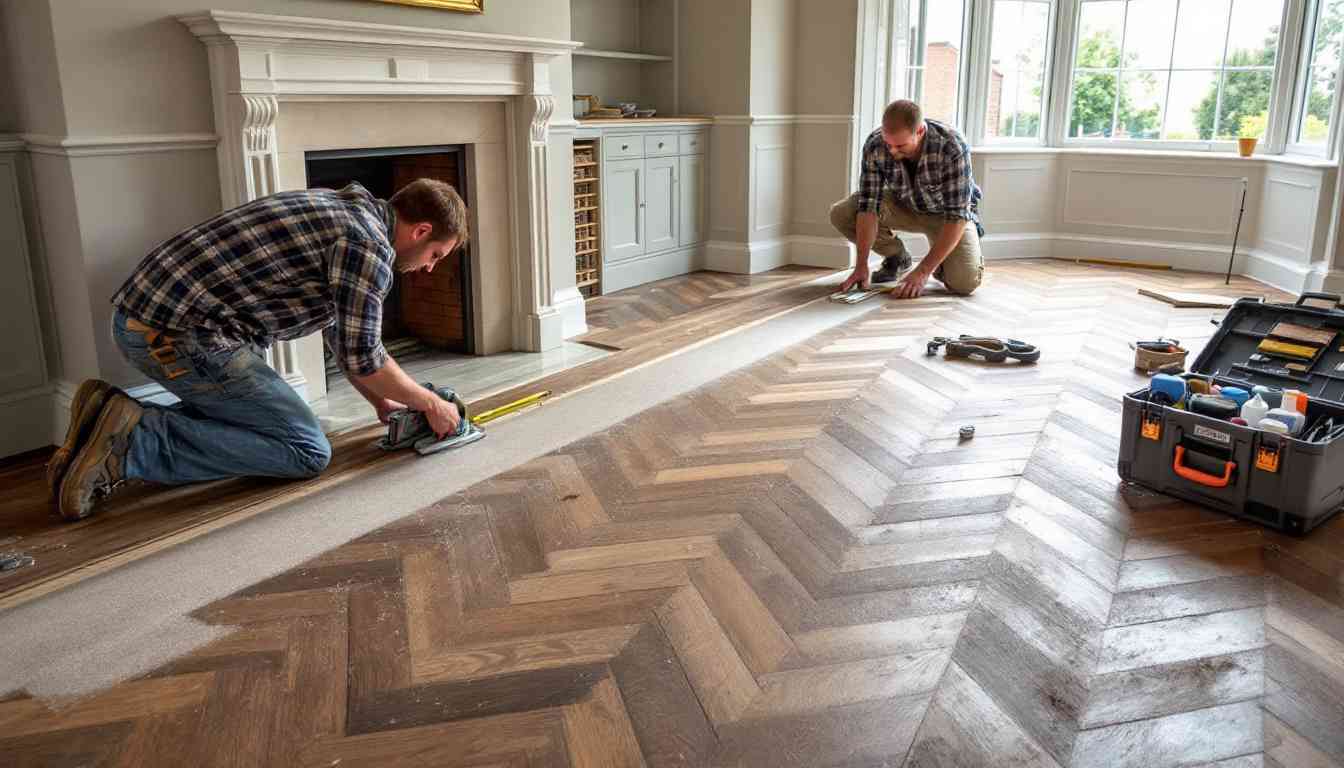
Hardwood floor installation, especially nail-down, benefits from experience.
You need a flooring nailer, and getting boards tight without gaps takes practice. Sanding and finishing is its own skill set—easy to gouge wood or leave finish marks.
Carpets really should be professional unless you’re doing a small, simple space.
Stretching tools aren’t cheap to rent, and poorly stretched carpet wrinkles.
your time matters too. A pro crew can knock out what takes you a weekend in a few hours.
Sometimes the labor cost is worth it just to have your space back faster.
Preparing Your Home for New Flooring
prep work determines whether your floor looks good in five years or starts failing in six months.
Subfloor condition is everything.
Walk your subfloor looking for squeaks, soft spots, damage. Fix those now.
Plywood subfloors should be screwed down better than nailed—screws don’t pop up like nails do.
Check for level. Most floating floors tolerate 3/16 inch variance over 10 feet.
More than that and you need a leveling compound.
Trust me, don’t skip this. Unlevel floors mean planks don’t click right, gaps open up, wear happens unevenly.
moisture testing is critical, especially on concrete.
Concrete can look dry but still be releasing moisture.
Calcium chloride tests or moisture meters tell you if you need vapor barriers.
Too much moisture and your floor fails—cupping, warping, mold.
Remove old flooring usually, though sometimes you can go over it. Old vinyl can stay if it’s smooth and well-adhered.
Carpet and pad need to come up.
Old tack strips get pulled. Then clean everything.
Debris under floating floors creates hollow spots that feel wrong and can cause wear.
acclimate your flooring. Most manufacturers want boxes sitting in the installation space for 48 hours minimum.
This lets the material adjust to your home’s temperature and humidity. Skip this and you risk expansion or contraction issues after installation.
Undercut door jambs so flooring slides underneath.
Stack a piece of your new flooring and underlayment next to the trim and cut with an oscillating saw. Way easier than trying to cut flooring to fit around intricate trim.
Best Practices for Long-Lasting Flooring
okay, floor’s in. Now what?
Expansion gaps matter forever.
Don’t let anyone talk you into skipping them or filling them with hard caulk.
Use compressible foam backer rod if you want, then flexible silicone sealant if needed for waterproofing. The floor needs room to move or it’ll buckle.
Transitions between rooms or flooring types need proper transition strips.
T-molding for same-height floors, reducers when heights differ, thresholds at exterior doors. These aren’t just cosmetic—they protect edges and allow independent movement.
cleaning methods vary by flooring type. Hardwood wants specific pH-neutral cleaners, never standing water.
Laminate tolerates damp mopping but not soaking. Vinyl is forgiving but harsh chemicals can dull it.
Tile can handle most cleaners though natural stone needs special care. Always check manufacturer recommendations.
Felt pads under furniture legs prevent scratches and dents.
Move those pads when you vacuum or they collect grit underneath that scratches anyway.
Area rugs in high-traffic zones extend floor life. Just make sure rug pads are non-staining—some rubber pads discolor floors.
Control humidity in your home. Too dry and wood floors gap and crack.
Too humid and everything swells.
Aim for 30-50% relative humidity year-round. Dehumidifiers in basements, humidifiers in winter if your air gets dry.
Deal with spills immediately.
Even waterproof floors can have seams where water might penetrate with enough time. Pet accidents need enzyme cleaners, not just water.
Refinishing hardwood every 7-10 years keeps it looking fresh.
You can go longer if traffic is light. Watch for when the finish starts wearing through to bare wood in pathways—that’s your sign.
inspect your floors periodically. Catch small issues before they become big ones.
A lifting plank in laminate can be re-glued. Wait too long and moisture gets under there and you’re replacing more.
Conclusion
Look, flooring is one of those decisions you live with every single day. Literally.
Every step you take in your home involves that choice you made.
There’s no perfect floor for everyone.
It depends on your space, your lifestyle, your budget, how much maintenance you want to deal with. But going in with decent knowledge means you won’t end up with carpet in your bathroom or solid hardwood in your basement.
take your time with this decision.
Visit showrooms, get samples to see in your actual lighting, read installation instructions before you buy. And yeah, sometimes calling in pros is worth every penny.
Your floors can last decades if you choose right and treat them well. That’s not a small thing.