

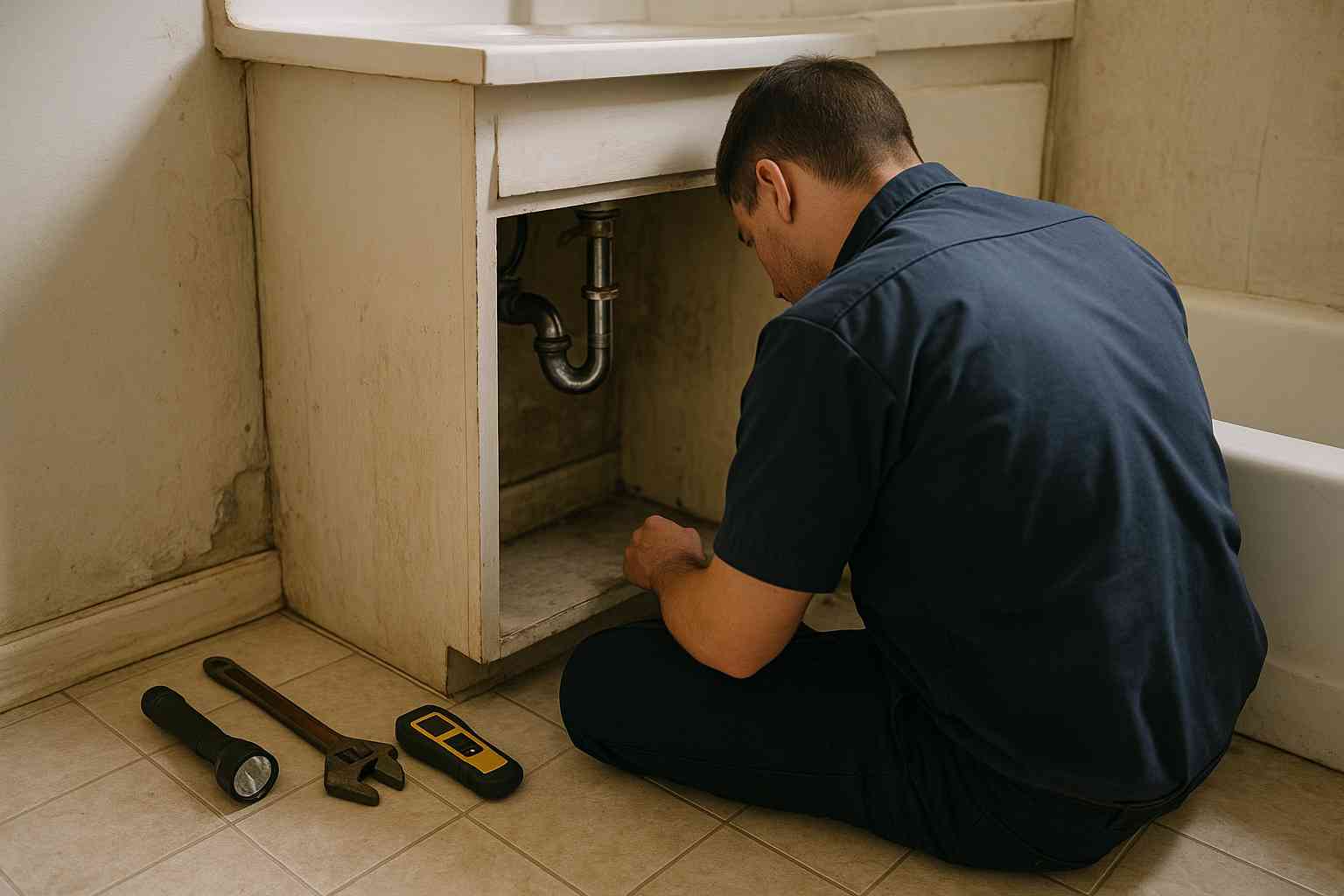
Hidden plumbing leaks are one of the most common causes of water damage in residential homes.
Unlike burst pipes or obvious flooding, hidden leaks often develop slowly behind walls, under flooring, or beneath foundations. Because they are difficult to detect, homeowners may not notice the problem until serious damage has already occurred.
In Chapel Hill, changing temperatures, aging pipes, and normal household wear can all contribute to hidden plumbing leaks.
Recognizing the warning signs early can help homeowners avoid costly repairs and protect the structural integrity of the home.
One of the earliest signs of a hidden leak is an unexplained increase in the water bill.
If water usage habits have not changed but monthly bills suddenly rise, a leak may be wasting water somewhere within the plumbing system.
Another common warning sign is musty or damp odors.
Moisture trapped behind walls or beneath floors creates the perfect environment for mold and mildew growth. Even if water damage is not visible, persistent musty smells often indicate hidden moisture.
Discoloration on ceilings or walls is another major red flag.
Yellow or brown stains may appear when leaking water slowly saturates drywall. Paint bubbling, peeling wallpaper, or warped surfaces can also indicate moisture problems.
Flooring issues should never be ignored. Hardwood floors may warp or buckle, while carpets may feel damp without explanation.
Tile flooring can also loosen if moisture weakens the underlying materials.
Low water pressure is another potential indicator of hidden leaks. Damaged pipes may reduce water flow throughout the home.
If pressure suddenly decreases in multiple fixtures, it may signal a plumbing issue behind the walls or underground.
Homeowners should also listen for unusual sounds. Hearing running water when no fixtures are being used may indicate a hidden leak somewhere within the Chapel Hill plumbing system.
Foundation leaks are especially concerning because they can weaken the structural stability of the home over time.
Slab leaks often occur beneath concrete foundations and may go unnoticed for extended periods.
Signs of slab leaks include warm spots on floors, cracks in walls, or unexplained moisture around the foundation.
Older homes in Chapel Hill may be more vulnerable to leaks due to aging plumbing materials.
Corroded pipes, worn fittings, and outdated plumbing systems are more likely to develop cracks or pinhole leaks over time.
Weather changes can also contribute to plumbing stress. Temperature fluctuations cause pipes to expand and contract, increasing the likelihood of leaks in weak areas.
Professional leak detection services help identify hidden plumbing problems quickly and accurately.
Modern technology allows plumbers to locate leaks without unnecessary demolition.
Specialized equipment such as moisture meters, thermal imaging cameras, and acoustic listening devices helps pinpoint hidden water sources.
Addressing leaks quickly is critical because water damage spreads rapidly. Moisture weakens wood framing, damages insulation, and encourages mold growth. The longer leaks remain unresolved, the more extensive repairs typically become.
Preventative maintenance plays a major role in avoiding hidden plumbing leaks.
Routine inspections allow plumbers to identify worn pipes, loose fittings, and early warning signs before major damage occurs.
Homeowners should also pay attention to changes in water quality. Rust-colored water, unusual tastes, or sediment may indicate pipe corrosion or plumbing deterioration.
Water heaters are another common source of hidden leaks.
Aging water heaters can develop small leaks near fittings or along the tank itself. Regular inspections help ensure the system remains safe and efficient.
Outdoor plumbing systems should not be overlooked either.
Underground irrigation lines, hose bibs, and exterior pipes can also leak and waste significant amounts of water.
When plumbing issues are suspected, homeowners should avoid delaying professional evaluations. Quick action often prevents more expensive repairs later.