

“Can anyone hear me?”
Static.
Then a voice breaks through the noise:
“Yeah, go ahead.”
That tiny exchange—half sentence, half radio crackle—has powered everything from construction sites to movie sets for decades. Someone presses a button. A message travels through the air. Someone answers back.
Simple. Immediate. Effective.
That’s the entire philosophy behind walkie talkies.
But here’s the interesting part: while the experience still feels the same, the technology behind it has changed dramatically. The radios many people used years ago were limited by distance and terrain.
Modern push-to-talk systems? Completely different story.
Let’s take a look at how walkie talkies evolved from basic radio tools into nationwide communication systems powered by modern networks.
The Original Walkie Talkie: Pure Radio Simplicity
Early walkie talkies were brilliantly straightforward.
Press the button.
Speak into the microphone.
Your voice converts into a radio signal and broadcasts through the air.
Any radio tuned to that same frequency hears the message instantly.
No apps.
No internet.
No network towers.
Just direct radio communication between devices.
It’s actually kind of elegant when you think about it. A tiny portable transmitter sending your voice through open space to another receiver nearby.
The downside?
Distance.
Most traditional walkie talkies work within a few miles under good conditions. Add buildings, mountains, or urban interference and that range shrinks quickly.
Great for a campsite.
Less ideal for coordinating teams spread across an entire city.
So engineers started looking for ways to extend the signal.
Repeaters: The First Range Upgrade
The next step in radio evolution introduced something called a repeater.
Think of it like a relay station for voice signals.
A repeater sits on a tower or elevated structure and listens for incoming radio transmissions. When it hears one, it rebroadcasts the signal at higher power and greater range.
Suddenly, walkie talkies could communicate across entire metropolitan areas.
Emergency responders, transportation networks, and public safety teams began using repeater systems to stay connected across large regions.
It worked well—but it came with a catch.
Infrastructure.
Repeaters require towers, maintenance, licensing, and careful frequency management. For large organizations that’s manageable. For smaller teams? Not always practical.
Then another technology entered the picture.
Cellular networks.
Push-To-Talk Over Cellular (PTT): The Big Leap
Instead of relying purely on radio signals, modern walkie talkies began integrating cellular connectivity.
Here’s how the system works.
You press the talk button.
Your voice converts into digital data.
That data travels through the cellular network.
Servers route the message to other radios in your group.
Within seconds, the message plays on every connected device.
From the user’s perspective, nothing changes.
You still press the button and talk.
But instead of a few miles of coverage, your voice can now travel across cities—or even across the country.
That’s the real breakthrough of LTE push-to-talk technology.
Why Modern Walkie Talkies Go Farther Than Ever
By connecting push-to-talk radios to cellular networks, engineers effectively removed the traditional distance limitations of radio communication.
As long as devices have network coverage, they can communicate.
That means teams in different states—or even across the country—can still operate as if they’re on the same radio channel.
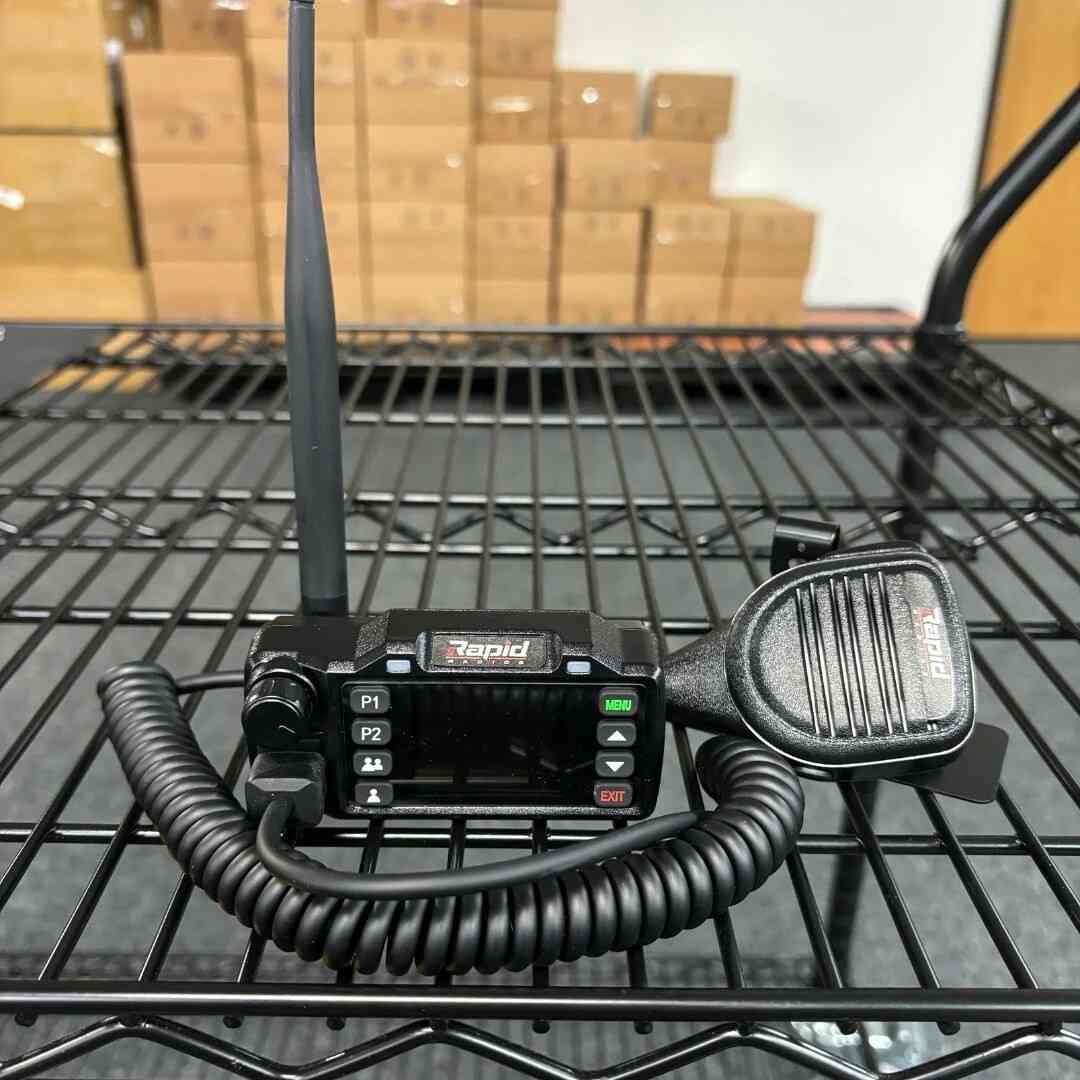
Devices using this technology demonstrate how modern walkie talkies combine classic simplicity with nationwide connectivity.
It’s essentially the same push-to-talk experience people already understand.
Just… bigger.
Much bigger.
Why Push-To-Talk Still Beats Phones Sometimes
Now here’s a fun question.
If smartphones exist, why do people still use walkie talkies?
Because phones are built for conversations. Radios are built for coordination.
With push-to-talk communication:
- One person speaks
- An entire team hears the message instantly
- No dialing, no ringing, no waiting
That speed is exactly why construction crews, event teams, logistics companies, and security operations still rely on radios every day.
Sometimes the simplest tools remain the most effective.
Final Thoughts: Same Idea, Smarter Technology
At their core, walkie talkies haven’t changed much in decades.
Press the button.
Speak clearly.
Someone hears you immediately.
What has changed is the technology supporting that simple interaction.
From early radio transmitters to repeater networks and now LTE push-to-talk systems, each step has expanded the reach of these devices while keeping the user experience beautifully simple.
And honestly?
That combination—simple to use, powerful under the hood—is exactly what good communication technology should be.