
If you’ve ever stood in a hallway surrounded by boxes thinking, “How is all of this mine?” you’re not alone.
The tricky part isn’t deciding whether you need storage. It’s choosing a unit that fits your stuff without paying for a ton of unused air.
A good rule: don’t plan by square footage alone. Think in “real life” items—dressers, mattresses, bins, and the awkward things like floor lamps or bikes.
Below is a practical cheat sheet for four common sizes, plus the packing habits that keep you from doing a full-body sigh every time you need something from the back.
5×5: The “Closet Plus” (Best for boxes, bins, and small furniture)
A 5×5 is about the size of a small walk-in closet. It’s perfect when your goal is to get items out of your living space, not store an entire room’s worth of furniture.
Think seasonal décor, luggage, sports gear, and those “I’m not ready to donate this yet” boxes.
Specific examples that usually fit comfortably: a small dresser, a nightstand, a couple of folding chairs, and roughly a dozen medium moving boxes if you stack cleanly.
If you’re storing anything you’ll need soon—say, holiday items—keep a narrow aisle down the middle instead of packing wall-to-wall.
The biggest mistake with 5×5 is tossing in loose items. Use uniform bins when you can, label two sides, and place heavier boxes on the bottom so the stack stays stable.
When space is tight, the shape of your containers matters as much as the volume.
5×10: The “Studio Support Unit” (Great for a mattress set and boxed household items)
A 5×10 is where storage starts feeling flexible. It typically fits the contents of a mid-sized bedroom or a studio’s overflow—especially if you’re storing more boxes and fewer bulky pieces.
This is a common choice for short moves, downsizing, or staging your home without living inside clutter.
A realistic loadout: a queen mattress and frame (stood on edge), a dresser, a small desk, two to four plastic shelving units, and 15–25 boxes depending on how tightly you pack.
If you’re storing fragile paper items, photos, or keepsakes you can’t replace, it’s worth thinking about temperature swings and humidity.
The Library of Congress notes that photographs do best in a relatively dry (around 30–50% RH), cool environment—guidance that applies to a lot of sentimental paper-based items too (see their recommendations on care and storage of photographs).
Packing tip that saves headaches: build your unit like a “library.”
Put long flat items (mirrors, headboards) along the walls, then stack labeled bins like book spines so you can read them without unstacking half your unit.
10×10: The “One-Bedroom Workhorse” (Most popular for moves and in-between living)
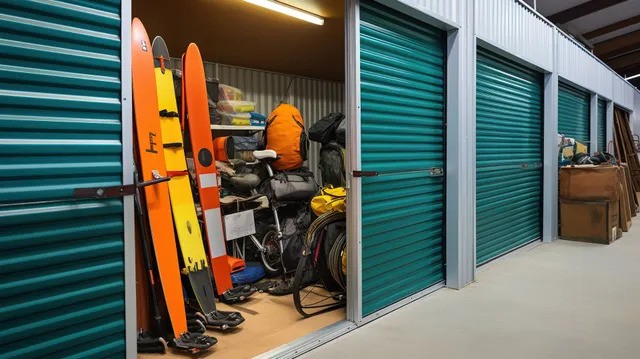
A 10×10 is the size people picture when they hear “storage unit.” It’s often enough for the contents of a one-bedroom apartment, especially if you disassemble furniture and pack with intention instead of chaos.
This size is also the sweet spot for planning because you can create zones: furniture on one side, boxes on the other, and a small path down the middle so you can actually access things.
If you want a simple way to sanity-check your choice, start by matching your biggest pieces (sofa, bed, dining set) to a unit plan and then work backward from there. A guide on storage unit sizes can help you visualize what different dimensions can hold before you commit.
One practical move: pack a “first-out” row near the front with items you’ll need soon (toolkit, cleaning supplies, a couple of kitchen boxes, seasonal clothing). It sounds obvious, but it’s the difference between a quick grab and a 45-minute box excavation.
10×20: The “Small Home” Option (For big furniture, appliances, and long-term storage)
A 10×20 starts to feel like a one-car garage. It’s a strong choice for larger moves, renovations, or storing the contents of a small home—especially if you have bulky furniture, outdoor items, or appliances.
What tends to fit: multiple mattresses, a full living room set, a dining table with chairs, large shelving, bikes, and several dozen boxes when stacked well.
The key here isn’t cramming more in—it’s keeping the unit safe and stable.
Use furniture blankets to prevent scrapes, keep soft items off the floor in case of moisture, and don’t stack heavy boxes on top of anything that can crush (lamps, frames, small electronics).
If you’re storing for a renovation, leave a clear “walk lane” and stage items by the order you’ll move them back into the house.
It’s a small planning step that saves you from hauling a couch out of the way just to reach a box of cabinet hardware.
Conclusion
Pick your unit size based on your biggest items first, then pack like you’re going to need something from the back—because you probably will.