

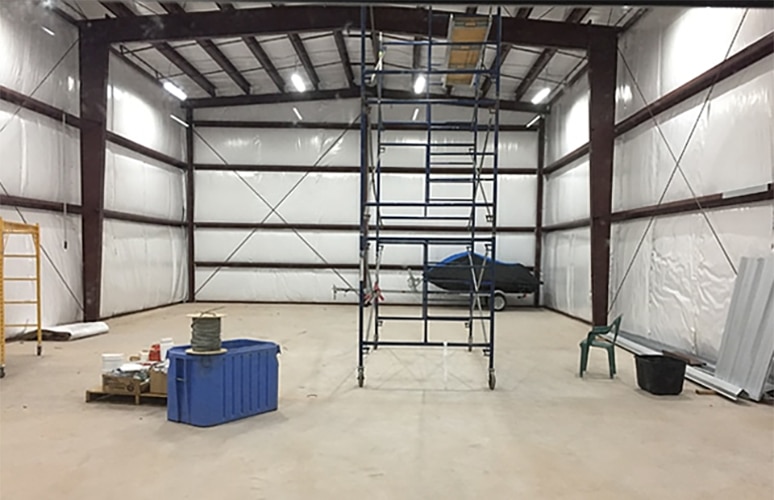
You finally got that metal building you’ve been wanting. Maybe it’s a workshop, a garage, or even a small business space. It looks great from the outside, but now comes a part many people overlook – insulation.
Trust me, I’ve seen too many people rush through this step only to regret it when their first utility bill arrives or when they’re shivering inside their new building in January.
Good insulation isn’t just about staying comfortable. It’s about protecting your investment and saving money year after year. I’ve spent years working with metal buildings, and I can tell you that proper insulation makes all the difference between a space you love using and one you avoid whenever the weather isn’t perfect.
In this guide, I’ll walk you through what really works when insulating metal buildings – not just theory, but practical tips from someone who’s done it wrong and right. Let’s get your metal building working for you all year round.
Why Insulating Metal Buildings Is Important?
Let me paint you a picture. It’s the middle of summer, and your metal building feels like the inside of a toaster. Or it’s winter, and you can practically see your breath inside. That’s what happens without proper insulation.
Metal conducts heat and cold extremely well – which is exactly what you don’t want in a building. An uninsulated metal building can reach temperatures 20-30 degrees hotter than outside during summer. In winter, heat escapes so fast you might as well be heating the neighborhood.
Beyond comfort, there’s a serious financial angle here. People I’ve worked with report 40-60% reductions in energy costs after properly insulating their metal buildings. One client in Minnesota cut his heating bill by over $200 monthly after we properly insulated his workshop.
There’s also the issue of condensation. Metal buildings sweat when warm air hits cold metal surfaces. Without proper insulation, this leads to water dripping from your ceiling and walls. Over time, this moisture can cause rust, damage stored items, and create a perfect environment for mold.
And let’s not forget noise. Rain hitting an uninsulated metal roof sounds like you’re inside a drum. Proper insulation can reduce this noise by up to 70%.
Want to know what really happens when you skip insulation? I visited a client who had stored valuable woodworking equipment in his uninsulated metal shed. After just one winter, temperature fluctuations and condensation had warped some tools and left others with rust spots. His $10,000 investment was damaged because he tried to save $2,000 on insulation.
A Guide To Insulate Metal Buildings Efficiently
Let’s talk strategy before we get into specifics. Insulating a metal building isn’t just about buying some material and slapping it up wherever. It requires thinking about your specific building, climate, and needs.
I’m going to walk you through the whole process, from figuring out what your building really needs to avoiding mistakes that can cost you thousands down the road. By the end, you’ll have a clear roadmap for insulating your metal building right the first time.
Know Your Climate and Usage First
Your approach to insulation should change dramatically based on where you live and how you use your building. This isn’t a one-size solution situation.
For hot climates like Texas or Arizona, you need to focus on keeping heat out. Reflective insulation that bounces heat away works wonders here. In places like Michigan or Maine, you need high R-value insulation to trap heat inside during those brutal winters.
Think about your building’s purpose too. A warehouse that’s rarely occupied has different needs than a workshop where you’ll spend hours every day. For occasionally used spaces, you might focus on preventing extreme temperatures and moisture. For frequently used spaces, comfort becomes much more important.
I worked with a guy in Georgia who installed the same insulation his buddy in Colorado used. Big mistake! His building turned into a sauna because he didn’t account for our humidity and heat patterns. Climate-specific solutions matter.
Let’s talk numbers. For cold climates, aim for R-values of R-25 to R-30 in the roof and R-19 to R-21 in the walls. For moderate climates, R-19 for roofs and R-13 for walls often works well. Hot climates might focus more on reflective values than R-values alone.
Target the Most Vulnerable Areas
Not all parts of your metal building need equal attention. Some areas leak heat like crazy while others aren’t as critical.
The roof is typically your biggest concern. Heat rises, so in winter, that’s where most heat loss occurs. In summer, the sun beats down directly on your roof. That’s why many experts recommend putting your highest R-value insulation in the roof, even if you scrimp elsewhere.
Wall insulation comes next in importance, particularly walls that face prevailing winds or get direct afternoon sun. These areas take the brunt of weather extremes.
Don’t forget about the floor if you have a raised metal building. Cold air can come right up through an uninsulated floor, making your heating efforts useless.
Doors and windows are major weak points. A poorly sealed door can leak as much air as a small hole in your wall. Weather stripping and door sweeps are cheap fixes that make a huge difference.
I once insulated a building for a client who wanted to save money by skipping the roof insulation. When summer hit, his air conditioner ran constantly but couldn’t keep up. We ended up redoing the whole job, and it cost him double what it would have if we’d done it right the first time.
Choose the Right Insulation Type
This is where many people get overwhelmed. There are several good options, each with pros and cons.
Fiberglass Batt Insulation This is what most people picture when thinking of insulation. It’s relatively inexpensive and widely available. The good news is it provides solid R-values, typically R-13 to R-19 for standard thicknesses. The downside? Installation matters hugely. Poor installation with gaps can reduce effectiveness by up to 30%.
Spray Foam Insulation I personally love closed-cell spray foam for metal buildings. It creates an air-tight seal and adds structural strength to your building – about 25% more rigid than without it. It gives you R-7 per inch, so even 2 inches gives significant insulation. The downside is cost – expect to pay $2-4 per square foot.
Rigid Board Insulation These foam boards give good R-values (about R-5 per inch) and are resistant to moisture. They’re great for walls but can be labor-intensive to cut and fit properly. They’re also not the cheapest option.
Reflective Insulation/Radiant Barrier This type doesn’t work through thickness but by reflecting heat away. It’s fantastic for hot climates, especially in roofs. Often used alongside other insulation types for maximum efficiency.
Loose Fill Insulation While not as common in metal buildings, loose fill can work well for hard-to-reach areas. It’s blown or poured into place.
Let me tell you about a client in Texas. He used a combination approach – reflective barrier in the roof with spray foam in the walls. His summer cooling costs dropped by 35% compared to the previous year. Why? Because he matched the right insulation types to his specific climate challenges.
Want to see what the experts say? According to the Metal Building Manufacturers Association, combining insulation types often provides the best performance, with reflective barriers addressing radiant heat and mass insulation like fiberglass or foam handling conductive heat transfer.
Avoid Common Installation Mistakes
I’ve seen some real insulation disasters over the years. Here are the pitfalls to avoid:
Compression Issues Squishing fiberglass insulation reduces its effectiveness dramatically. If you have 6-inch wall cavities, don’t stuff R-19 insulation (which is about 6 inches thick) behind pipes or conduits where it gets compressed. You’ll lose a huge amount of insulating power.
Gaps and Voids Even small gaps in insulation create “thermal bridges” where heat moves freely. Be meticulous about covering every square inch, especially around outlets, switches, and where walls meet the roof.
Vapor Barrier Confusion In most climates, the vapor barrier goes on the warm side of the insulation (inside in cold climates, outside in hot humid ones). Getting this backward can trap moisture in your insulation, leading to mold and reduced effectiveness.
Insufficient Roof Insulation I mentioned this before, but it bears repeating – skimping on roof insulation is the most common and costly mistake I see. Put your money there first.
Poor Air Sealing Insulation works with air sealing, not instead of it. Before insulating, seal all gaps, cracks, and penetrations with appropriate caulk or foam.
I once visited a building where the owner complained about high energy bills despite new insulation. The problem? The contractor had left 2-inch gaps between all the fiberglass batts “for expansion.” That’s not how it works! Those gaps were letting all his expensive heated air escape.
Consider Ventilation as Part of the Strategy
Here’s something that seems counterintuitive – after sealing everything up tight, you need to think about controlled ventilation.
A well-insulated building without proper ventilation can develop moisture problems. In winter, activities inside create moisture that needs somewhere to go. In summer, proper ventilation helps move hot air out.
Ridge vents along the top of the roof paired with soffit vents at the eaves create natural airflow that helps regulate temperature and moisture. For more control, consider powered ventilation fans with humidity sensors.
I worked on a metal garage that was perfectly insulated but lacked ventilation. The owner used it as a workshop, and his breathing and sweating (plus some wet wood he was working with) created so much humidity that condensation formed inside the insulation. Within a year, he had mold issues. We added proper vents and solved the problem.
For buildings where you spend lots of time, consider a mini-split heat pump system along with your insulation. These efficient units can both heat and cool without requiring ductwork, making them perfect for metal buildings.
Conclusion
Insulating your metal building right isn’t just about comfort – it’s about protecting your investment and saving money every month on energy costs. I’ve seen too many people rush this step or try to save money by cutting corners, only to pay much more in the long run.
Remember the key points: match your insulation strategy to your climate and building use, focus on the most vulnerable areas first, choose appropriate insulation types, avoid common installation mistakes, and don’t forget about ventilation.
If you’re not comfortable tackling this project yourself, hiring professionals is money well spent. A properly insulated metal building will serve you well for decades, through scorching summers and freezing winters alike.
Your metal building has the potential to be a comfortable, efficient space year-round. With the right insulation approach, you’ll be amazed at the difference in both comfort and cost. Trust me, I’ve seen the transformation hundreds of times – and the smiles on owners’ faces when they receive that first lower energy bill.