
A thoughtfully designed backyard extends the functional footprint of the home.
It offers a flexible environment for relaxation, recreation, and connection.
For families, the outdoor space must do more than look appealing. It must accommodate evolving needs, ensure safety, and encourage everyday use.
Choosing the right backyard layout requires a deliberate balance between aesthetics, practicality, and long-term adaptability.
Let’s explore how you can shape an outdoor environment that supports family living.
Know How Your Family Uses Outdoor Space
The most effective backyard layouts begin with a clear understanding of how the space will be used.
Families rarely share identical needs, and outdoor environments should reflect these differences without creating conflict between uses.
Young children require safe, visible play zones, while teenagers may prefer areas for socializing or sports.
Adults often seek quiet corners for relaxation or entertainment.
Mapping out these preferences allows for a layout that accommodates multiple functions without overcrowding the space.
Rather than designing for a single purpose, the goal is to create a layered environment.
Spaces should overlap in a way that feels natural, allowing for both shared activities and individual pursuits.
Divide the Yard into Functional Zones
A well-structured backyard relies on intentional zoning. Dividing the yard into distinct areas improves usability while maintaining visual cohesion.
Common zones include dining areas, play spaces, gardening sections, and relaxation zones.
Active zones, such as play areas, should be positioned away from quieter spaces to minimize disruption.
Dining and entertainment areas benefit from proximity to the house for ease of access.
Transitions between zones should feel seamless. Subtle design elements such as changes in ground materials, plant borders, or elevation shifts can define spaces without creating rigid separations.
Prioritize Safety and Design
Safety is a foundation of consideration in any family-oriented backyard.
However, it does not require sacrificing visual appeal. Instead, safety features can be integrated into the overall design language.
For example, clear sightlines are critical for families with young children.
Parents should be able to monitor activity for key vantage points, like the kitchen or patio. Soft landscaping materials, rounded edges, and non-slip surfaces further reduce risk.
Boundaries also play a vital role.
A well-designed perimeter enhances privacy and also safety. That’s why a thoughtful collaboration with a fence company Naperville homeowners trust, for example, can ensure structural elements are incorporated seamlessly into a cohesive backyard layout.
Create Flexible Spaces
Family needs evolve, and backyard layouts should reflect this reality.
Designing with flexibility in mind ensures the space remains relevant for years to come.
Multipurpose areas are especially valuable. For example, a lawn that serves as a play area for children can later transition into a space for gatherings or outdoor fitness.
Modular furniture and movable features can allow easy reconfiguration.
Ensure to avoid overly specialized installations that limit adaptability.
Instead, prioritize foundational elements that can support various uses. This approach increases the lifespan of the design and also maximizes return on investment.
Balance Open Space and Structured Features
An effective backyard layout strikes a careful balance between open areas and built structures.
Too much open space can feel undefined, while excessive structures may create a sense of confinement.
Open lawns provide versatility and visual breathing room. They are essential for activities that require space, such as games or informal gatherings.
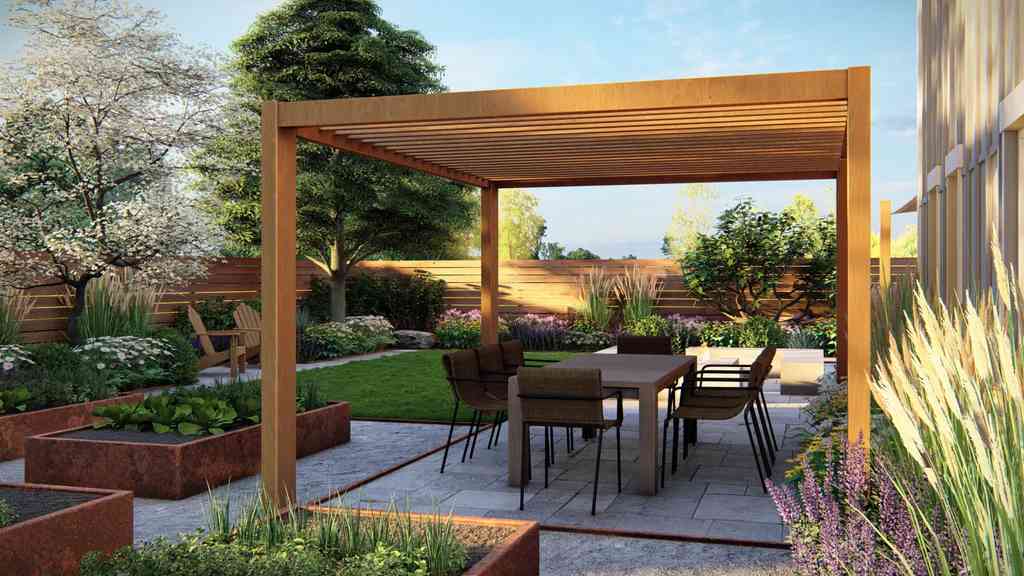
At the same time, structured features such as pergolas, patios, and seating areas introduce purpose and organization.
The key lies in proportion. Each element should contribute to the overall composition without overwhelming it.
A balanced layout feels intentional and harmonious, supporting both active and passive use.
Integrate Natural Elements
Natural elements enhance both the functionality and aesthetic quality of a backyard.
Trees, shrubs, and gardens continue to provide shade, privacy, and environmental comfort while reinforcing a connection to nature.
Strategic planting can define zones, guide movement, and soften hardships.
Shade trees, in particular, are invaluable in creating comfortable outdoor environments during warmer months.
On the other hand, native plants offer additional benefits, including lower maintenance and improved resilience.
Lastly, water features, when thoughtfully integrated, introduce a sense of tranquility.
Even small elements can significantly alleviate the sensory experience of the space, making it more inviting for daily use.
Design for Seamless Indoor-Outdoor Connection
A successful backyard layout extends the living space of the home rather than existing as a separate entity.
The transition between indoor and outdoor areas should feel natural and intuitive.
Patios, decks, and large openings such as sliding or folding doors facilitate this connection.
Materials and design elements that echo the interior create visual continuity, reinforcing the sense of cohesion.
Functionality is equally important. You can position dining areas near the kitchen to simplify meal preparation and service, while lounge spaces adjacent to living areas will encourage regular use.
Plan for Efficient Circulation and Movement
Movement within the backyard should feel effortless. Poor circulation can disrupt the usability of the space, even if individual elements are well-designed. Pathways play a crucial role in defining movement.
They should connect key zones logically, minimizing unnecessary detours.
Materials should be durable and consistent with the overall design.
Spacing between features must also be considered. Overcrowding can create obstacles and reduce comfort.
A well-planned layout allows for smooth transitions between areas, supporting both everyday activities and larger gatherings.
Incorporate Lighting for Function and Atmosphere
Lighting is often underestimated in backyard design, yet it significantly influences both safety and ambiance.
A layered lighting approach ensures that the space is functional and inviting after sunset. Task lighting is essential for areas such as pathways, cooking zones, and entrances.
Ambient lighting creates a warm, welcoming atmosphere, while accent lighting highlights key features such as plants or architectural elements.
Energy-efficient options, including solar and LED fixtures, also offer practical advantages.
Properly integrated lighting expands the usability of the backyard, allowing families to enjoy the space throughout the evening.
Endnote
Choosing the right backyard layout for family living requires a thoughtful synthesis of design principles and practical considerations.
The most successful spaces are those that respond to the unique dynamics of the household while remaining adaptable to future needs.
By prioritizing functionality, safety, and cohesiveness, homeowners can create outfit environments that enrich their daily lives.