
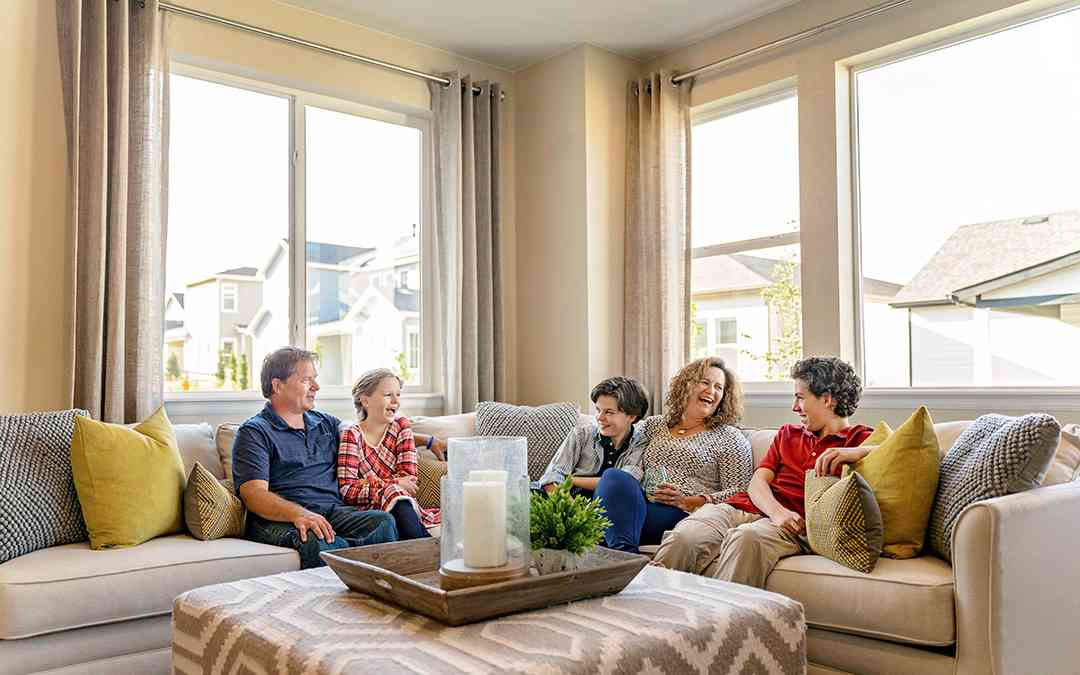
No single design element transforms the quality of a home’s interior more profoundly than natural light.
Regardless of how beautifully they are completed or furnished, areas with plenty of sunlight feel bigger, cosier, and more welcoming than identically sized rooms that don’t.
The relationship between light and how we experience built space is not aesthetic preference but physiological reality, which is why residential architects treat orientation, window placement, and spatial layout as foundational decisions rather than secondary refinements.
Light as a Design Material
The majority of what good light design actually entails is missed when daylight is treated as a passive result of having windows.
Throughout the day and throughout the seasons, light travels through a building, changing in angle, intensity, and colour temperature in ways that alter how places feel at different times.
Homes that are not just illuminated by light but are animated by it are the result of comprehending this movement and designing in reaction to it.
The cooler, cleaner quality of morning light from the east is ideal for breakfast areas and kitchens where the day starts.
The warmer, lower-angle afternoon and evening light from the west creates the golden tones and deep shadows that are ideal for living rooms and dining areas where people spend the latter portion of the day.
South-facing aspects are suitable for areas that benefit from constant warmth and brightness since they receive the most consistent light throughout the day.
These orientations represent the initial frameworks that good home design employs, modifies, and sometimes purposefully subverts to suit the unique character of a project rather than strict guidelines.
The Window as More Than an Opening
One of the most important choices in residential architecture is window design, which affects ventilation, privacy, thermal performance, acoustic quality, and the essential visual link between the interior and exterior.
The majority of its true meaning is lost when it is reduced to a decision about size and style.
The way light enters and spreads throughout a space is influenced by a window’s placement within a wall.
Compared to a window positioned at standard head height, one high in a wall, closer to the ceiling, distributes light more evenly and deeper into the room. Because they are positioned above the typical line of sight, clerestory windows allow light to enter spaces without compromising privacy as ground-level windows do in urban environments.
Aspect ratio is very important. Vertical light beams from tall, narrow windows highlight ceiling height and generate a striking contrast.
Wide, horizontal windows are ideal for areas where a wide visual link to the landscape is needed because they more uniformly distribute light across floor and wall surfaces.
Neither is better by nature. Each fulfils distinct spatial purposes.
Borrowed Light and Interior Connections
A home’s rooms cannot all have direct access to an external wall.
Secondary bedrooms, bathrooms, utility areas, and circulation areas are frequently located inside the building’s layout without being directly exposed to the outside.
Whether the interior appears as a cohesive, light-filled whole or as a collection of bright rooms divided by dark transitions depends on how light enters these areas from the ones that do have it.
Extending the reach of available daylight beyond the rooms that directly receive it is the goal of internal glazed screens, borrowed light above door openings, open-plan arrangements that permit light to travel across spatial boundaries, and strategically placed mirrors that reroute natural light into darker areas.
These internal light paths are given the same consideration by residential architects as direct window placement.
Whether a corridor, landing or bathroom receives any natural light at all greatly influences its quality, and even little design changes that do so provide outcomes that are out of proportion to their seeming simplicity.
Thermal Performance and Light Together
Thermal performance needs must be taken into consideration when designing large windows that optimise daylight.
Spaces that overheat in the summer and lose heat quickly in the winter are caused by glazing that lets in a lot of light but provides inadequate insulation.
This undermines comfort and energy efficiency in ways that make the light gain ineffective.
Careful specification of coating types, gas fills, and frame thermal qualities is necessary for modern high-performance glazing systems to provide outstanding thermal performance without sacrificing visual clarity.
Understanding how the window will function in all seasons and at all times of day is necessary to achieve this balance, as opposed to evaluating it solely in the circumstances that give it the best appearance.
What Skilled Design Produces
The homes that feel instinctively right, where occupants report an immediate sense of ease and comfort without being able to identify its source, are almost always homes where light has been considered from the earliest stages of the design process.
The plan’s orientation, the location and size of openings, and the spatial sequences that occupants move through have all been designed to take into account how light will enter the building on typical days and during the various seasons.
It is this way of thinking that sets planned homes apart from built ones.