
I was standing in my kitchen last week, trying to make dinner while my partner was putting away groceries. We kept bumping into each other, reaching across one another, and generally getting in each other’s way.
That’s when it hit me – our kitchen layout is terrible! After spending a small fortune on beautiful countertops and fancy appliances, we completely overlooked the most important aspect: how the space actually functions.
Bad kitchen layouts are like those fancy shoes that look amazing but give you blisters after ten minutes. They might photograph well for social media, but they make daily life unnecessarily difficult. So I thought I’d share some insights on kitchen layout mistakes I’ve both made and seen, and how you can avoid them in your own home.
Why Kitchen Layout Matters
Kitchen layout isn’t just about aesthetics – it’s about making your life easier. Think about it: the average person spends over 400 hours per year in their kitchen. That’s almost three solid weeks! Would you want to spend three weeks in a space that constantly frustrates you?
A good layout saves you time and energy. I learned this the hard way when I lived in an apartment where I had to walk twelve steps between the fridge and the stove. Making a simple meal felt like training for a marathon.
A well-designed kitchen layout also affects:
- Safety: Fewer trips and less reaching means fewer accidents
- Social interaction: A good layout allows for conversation while cooking
- Home value: Kitchens sell houses, and functional ones sell faster
- Your sanity: Nothing tests patience like trying to cook in a poorly designed space
According to a survey by the National Association of Home Builders, 80% of homebuyers rank the kitchen as their top priority when purchasing a home. So getting it right matters not just for you, but potentially for future buyers too.
7 Kitchen Layout Mistakes and How to Avoid Them
Before diving into specifics, let me say that many of these mistakes happen because people focus on individual elements rather than how everything works together. Creating a 3D design plan before finalizing your kitchen layout can help you visualize the space and avoid many of these common errors. Now, let’s get into the specific mistakes.
Mistake #1: Ignoring the Work Triangle
The kitchen work triangle connects your three main work areas: the sink, refrigerator, and stove. It’s probably the most fundamental concept in kitchen design, yet I see it ignored constantly.
The Problem with a Broken Triangle
In my friend Malta’s kitchen renovation, she was so excited about her massive island that she placed her sink there, the fridge on one wall, and the stove on the opposite wall. Now she walks about 30 steps just to make a simple meal. I watched her cook dinner once, and she looked like she was doing laps around a track.
When your triangle is too large, you waste steps. When it’s too small, you feel cramped. When it’s blocked by an island or other obstacle, your workflow becomes awkward.
The Fix: Respect the Triangle
The total distance between your three main work centers should be between 12 and 26 feet. Too much smaller and you’re cramped, too much larger and you’re running a marathon.
I also recommend thinking about what you cook most often. If you’re a baker, maybe the mixer needs to be within your triangle. If you’re a stir-fry enthusiast, perhaps counter space next to the stove is more important than next to the sink.
My own kitchen improved dramatically when I rearranged to create a proper work triangle. Now I can grab something from the fridge, wash it at the sink, and move it to the stove without taking a single unnecessary step.
Mistake #2: Wasting Corner Space
Corner cabinets can be kitchen gold mines or black holes where tupperware goes to die. It all depends on how you handle them.
The Corner Cabinet Conundrum
In my current kitchen, I have a corner cabinet with no special hardware. To reach anything at the back, I basically need to crawl inside the cabinet. It’s ridiculous! Last week, I wanted to use my slow cooker, which was stored in the back corner. After emptying half the cabinet contents onto the floor just to reach it, I vowed never to put it back there again.
Corner spaces are tricky because standard shelves leave so much dead space in the corners. Without proper planning, you’ll end up with storage you can’t actually use.
The Fix: Smart Corner Solutions
There are several great options for corner cabinets:
- Lazy Susans (rotating shelves) make everything accessible
- Pull-out corner drawers that extend fully
- Magic corner units that bring the back contents forward when you open the door
If I could go back in time, I’d definitely install a lazy Susan in my corner cabinet. The extra cost is absolutely worth not having to play kitchen Tetris every time you need something from the back.
Mistake #3: Poor Lighting Placement
Kitchen lighting is often an afterthought, but it can make or break how functional your space is.
The Shadow Problem
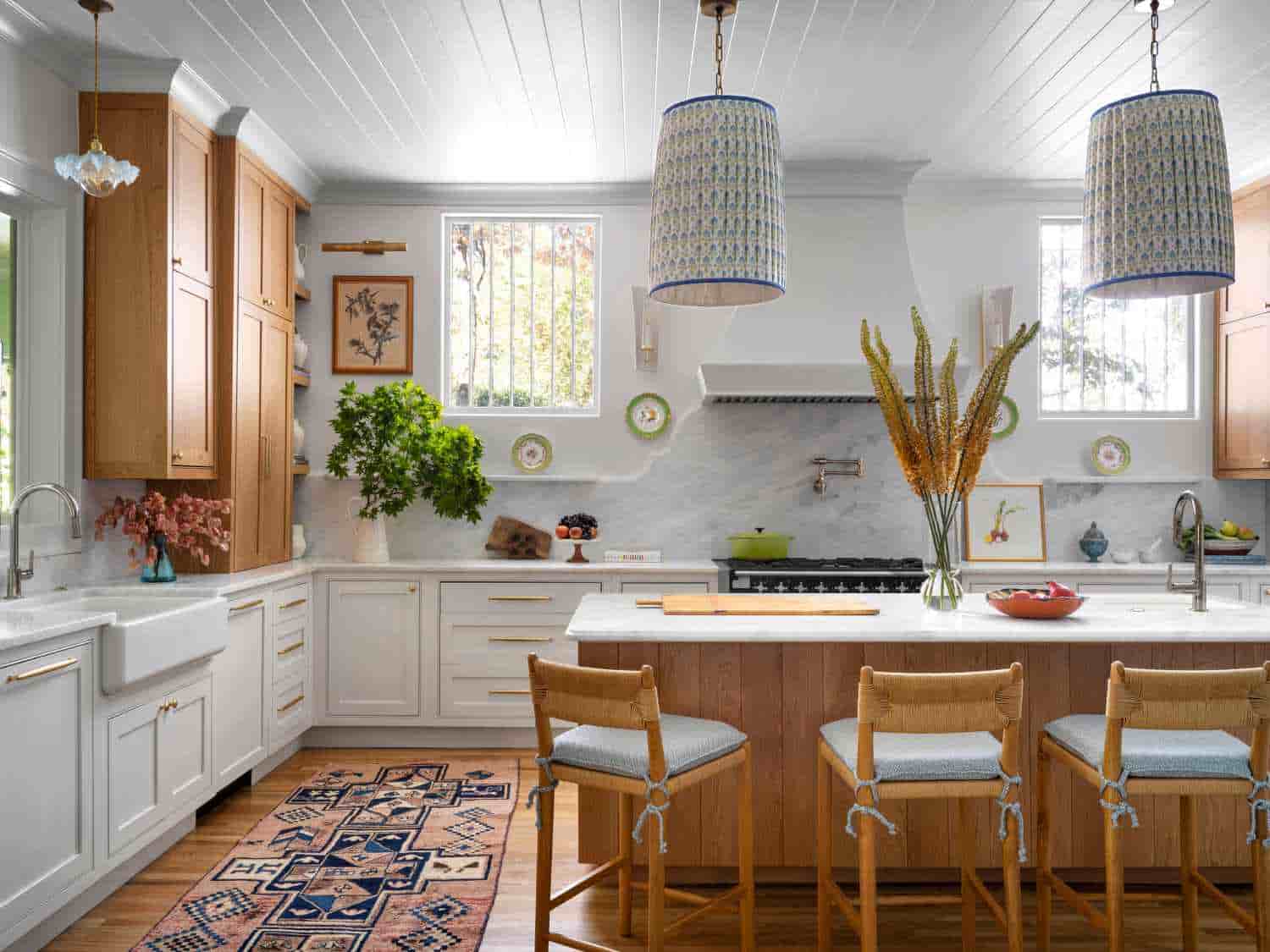
In my parents’ kitchen, they have beautiful pendant lights hanging over their island. They look great, but when my dad stands at the counter to chop vegetables, he casts a shadow exactly where he’s working. I’ve watched him squint and lean awkwardly just to see what he’s doing.
Overhead lighting alone creates shadows right where you need to see most – on your work surfaces.
The Fix: Layered Lighting
The solution is a three-layer lighting approach:
- Ambient lighting: Your general overhead lights
- Task lighting: Under-cabinet lights that illuminate work surfaces
- Accent lighting: Inside glass cabinets or above cabinets for atmosphere
Under-cabinet lighting is a game-changer. It illuminates your workspace without shadows, making cooking safer and more pleasant. It’s even something you can add to an existing kitchen without major renovation.
When I added under-cabinet lighting to my kitchen, I couldn’t believe the difference it made. I could actually see what I was cooking at night! Revolutionary, I know.
Mistake #4: Blocking Traffic Flow
Kitchens aren’t just for cooking – they’re pathways to other parts of your home.
The Traffic Jam Issue
I once visited a beautiful kitchen with a massive island. It looked amazing until I noticed that when the dishwasher was open, no one could walk through the kitchen. The same thing happened with the oven door and the fridge. It was like a real-life puzzle game trying to cook while someone else needed to walk through.
Traffic flow issues become especially obvious during parties or when multiple people cook together. That’s when poor planning really shows.
The Fix: Plan for Movement
Allow at least 36 inches for walkways throughout the kitchen, and 42-48 inches for work aisles. When planning your layout, open all appliance doors (on paper or in your 3D plan) to make sure they don’t block pathways when in use.
Consider how people move through your kitchen to other rooms. Is it a pathway from the living room to the dining room? Make sure there’s a clear path that doesn’t interfere with the cooking zone.
My neighbor solved this problem by creating a “work kitchen” and a “pass-through” area. People can grab drinks from the fridge without disturbing the cook. Smart!
Mistake #5: Insufficient Storage Solutions
We all have that one kitchen drawer – the one that holds everything from batteries to take-out menus to that weird attachment for your blender that you’ve never used. Poor storage planning leads to cluttered counters and frustration.
The Storage Shortage Signs
In my last apartment, I had exactly four drawers in the entire kitchen. FOUR. I ended up stacking pots on the stove and storing baking sheets in the oven. Every time I wanted to cook, I had to unpack half the kitchen first.
Without enough storage, or the right kind of storage, your kitchen becomes cluttered and inefficient.
The Fix: Quality Over Quantity
Focus on useful storage rather than just more storage:
- Deep drawers instead of lower cabinets for pots and pans
- Vertical dividers for baking sheets and cutting boards
- Pull-out pantry shelves so nothing gets lost in the back
- Door-mounted storage for spices and cleaning supplies
One of the best changes I made in my kitchen was replacing a lower cabinet with three large drawers. Now I can see and reach everything without kneeling on the floor and digging through dark cabinet depths.
Mistake #6: Poor Electrical Layout or Ventilation
Electrical outlets and ventilation might not be the sexiest topics, but they’re crucial to a functional kitchen.
The Extension Cord Kitchen
I once rented a kitchen with exactly two outlets – one behind the refrigerator and one next to the sink. Using more than one appliance at a time required an extension cord daisy chain that would make any fire marshal faint.
And ventilation? My friend’s beautiful kitchen remodel skimped on the range hood. Now her smoke detector goes off every time she cooks bacon, and there’s a lovely grease film on all her cabinets.
The Fix: Plan for Power and Air
- Install outlets every 4 feet along countertops
- Consider adding outlets inside a drawer for charging devices
- Plan for specialty outlets for high-powered appliances
- Choose a range hood that extends the full width of your cooktop and vents outside if possible
When I redid my kitchen, I added an outlet inside a drawer with a little notch for cords. Now I can charge my phone and tablet without cluttering the counter. It’s those little details that make daily life easier.
Conclusion
A well-designed kitchen isn’t about following trends or spending a fortune. It’s about creating a space that works for how you actually live and cook.
The mistakes I’ve outlined aren’t theoretical – they’re real problems I’ve experienced or witnessed in kitchens. The good news is that many can be fixed without a complete renovation. Under-cabinet lighting, corner cabinet organizers, and smart storage solutions can improve your existing space dramatically.
If you’re planning a new kitchen, take the time to really think about how you’ll use the space. Walk through imaginary cooking scenarios. Open and close appliance doors on your plan. Consider traffic patterns when multiple people are present.
Your kitchen should work as good as it looks. Because at the end of a long day, what matters most isn’t whether your kitchen could be featured in a magazine – it’s whether you can cook a meal without wanting to pull your hair out.
Trust me, I’ve cooked in enough poorly designed kitchens to know the difference. Your future self will thank you for the thought you put into your kitchen layout today.